
Beagle Separation Anxiety: Signs, Support and Gentle First Steps
Recognise possible separation-related distress, record what happens and work toward comfortable alone time with appropriate professional support.
6 min read
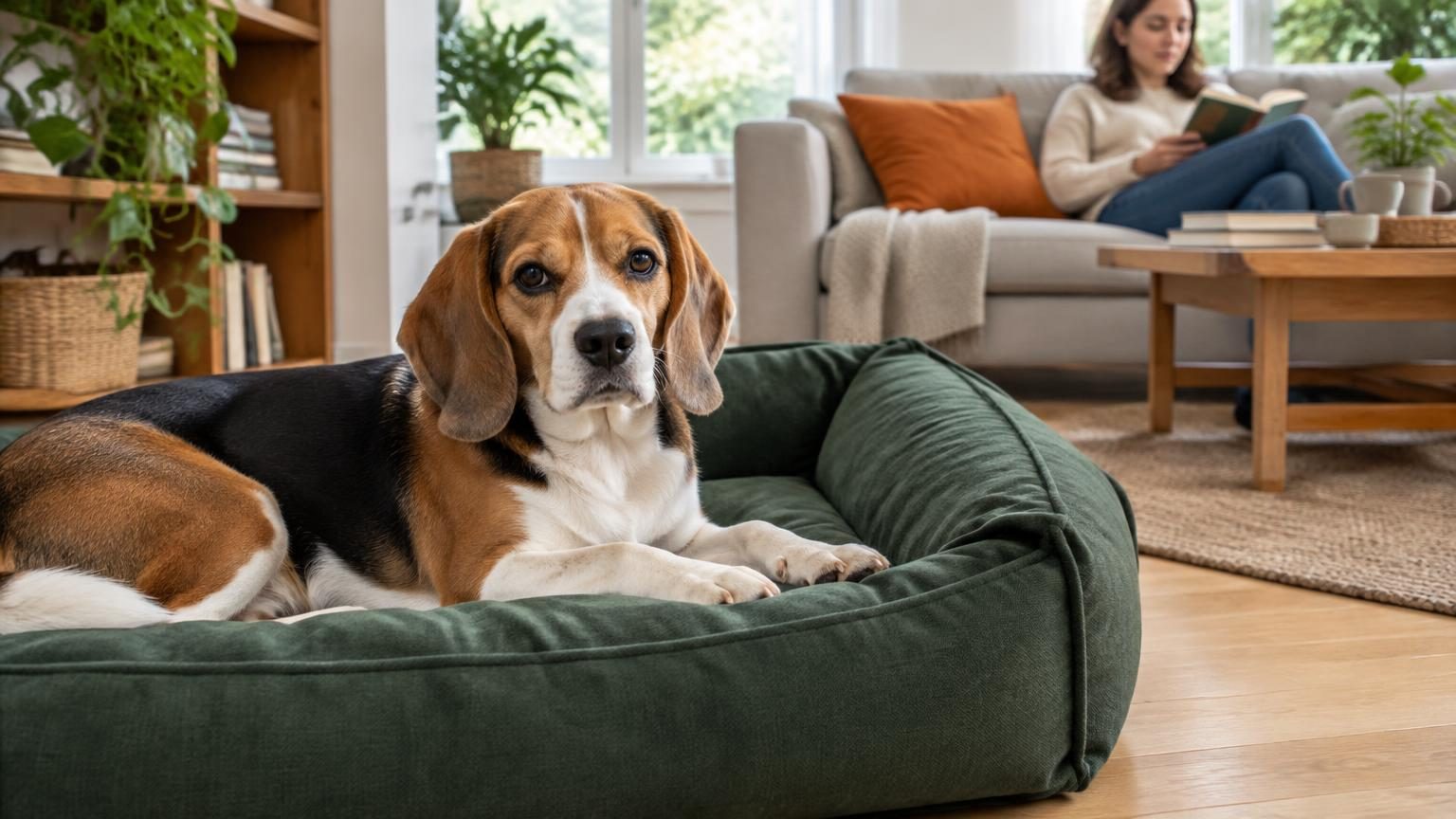
Veterinary review has not been verified. This article is educational only and not a substitute for professional veterinary advice.
Being sociable is not the same as having anxiety
A Beagle may enjoy company without having a separation-related disorder. Do not assume every Beagle struggles alone, or label distress as stubbornness or revenge. The useful question is what this particular dog experiences when people leave and which support it needs.
This guide describes possible signs and cautious first steps; it cannot diagnose your dog or replace an individualized treatment plan. ASPCA guidance explains that barking, destruction and house soiling can have several causes. Persistent or severe distress calls for veterinary assessment and an appropriately qualified behavior professional, not a tougher departure routine.
Observe patterns rather than one isolated event
Possible signs include repeated pacing, vocalizing, panting, drooling, escape attempts or destruction around exits during absences. A dog may also become unsettled as departure cues appear. These signs are not a diagnosis: noises outdoors, incomplete house training, discomfort and other problems can create overlapping patterns.
A brief howl at a passing siren means something different from prolonged distress linked to departures. Use our howling guide and barking guide for context, but do not force the behavior into a convenient explanation. Sudden changes, especially toilet accidents or signs of pain, deserve a veterinary conversation.
Keep a useful, humane observation record
If safe, use a camera to see what happens during an ordinary manageable absence. Do not deliberately leave a frightened dog longer to obtain dramatic evidence. Record departure time, first change in behavior, whether the dog settles and any outside trigger you can identify.
Notice quiet signs too: a dog frozen near the door is not necessarily comfortable just because it is silent. Save short relevant clips to show your professional rather than interpreting every movement yourself. Include what happened before leaving and how the dog behaved after your return.
- What was different that day: schedule, visitors, noise or a new setting?
- Which behaviors appeared and when, rather than simply “bad when alone”?
- Did the dog rest, explore normally or engage with a familiar safe activity?
- Were there accidents, damage, discomfort or injury requiring assessment?
Rule out health and everyday-care problems
ASPCA advises considering medical causes of house soiling and other explanations before concluding that separation anxiety is present. Tell your vet about new accidents, changes in drinking or toileting, mobility, sleep and any medication. Do not change medication or try supplements without professional guidance.
Also check ordinary needs: appropriate toilet opportunities, comfortable temperature, water, rest and suitable daily activity. Our care guide helps you review the routine, while potty training guidance addresses a separate learning problem. Meeting these needs matters, but it does not automatically treat anxiety.
Reduce preventable distress while you arrange help
Where possible, organize company or another suitable arrangement so a distressed dog is not repeatedly left beyond what it can currently cope with. A trusted person staying at home, carefully chosen walking help or another familiar arrangement may be useful. Check that the alternative itself is comfortable for your dog.
This can be difficult around work and family responsibilities. Make a realistic list of available support and explain your constraints to the professional helping you. Do not present a sitter or day care as a universal solution; unfamiliar groups or locations may be stressful for some dogs. The aim is a workable plan that limits distress while assessment and training proceed.
Choose a safe resting space, not forced confinement
Use a comfortable area the dog already accepts, with hazards removed and an ordinary resting option. A crate may suit a dog who is genuinely relaxed there, but it is not a treatment for separation anxiety. Confinement can intensify distress for some dogs.
If your Beagle claws, bites or tries to escape confinement, do not leave it to struggle or buy stronger barriers as the sole response. ASPCA warns that escape attempts can cause injury. Get professional advice about a safer arrangement. Do not leave walking harnesses or other snagging equipment on an unsupervised dog.
Gentle alone-time practice starts below distress
For a dog who remains comfortable, an initial step may be a brief movement away while it rests, followed by an ordinary return. The appropriate starting point could be within the same room; it is not automatically an outdoor departure. If even that creates worry, seek help rather than pushing through.
ASPCA’s gradual-separation approach emphasizes avoiding fear and adjusting to the dog’s response; complex cases need experienced professional guidance. Do not follow a timetable that increases absence every day regardless of behavior. Practise only manageable steps, allow recovery and use observation to inform the plan. A serious problem should not be treated as a simple obedience exercise.
Use examples as observations, not prescriptions
Imagine a Beagle who rests while you step toward the kitchen but rises and paces when you touch the front door. That tells you the door step is currently harder; it does not tell you to repeat it until the dog gives up. A professional may help select a smaller, comfortable step and interpret the pattern.
If a previously comfortable brief separation becomes difficult, reduce the demand and consider what changed. There is no guaranteed sequence from seconds to a full workday. Recovery varies, and quietness alone does not prove comfort. Record successes and setbacks without blaming yourself or the dog.
Enrichment is support, not an anxiety cure
An easy activity can be pleasant for a dog who is comfortable enough to use it. A dog who is too distressed to eat or play is not being ungrateful, and a harder puzzle is not the answer. Our mental stimulation guide offers supervised activities and explains why rest matters.
Use only items appropriate for your dog and the level of supervision. Do not assume a toy is safe alone because it survived one trial. Avoid treating an exhausting walk as a cure either; suitable exercise supports everyday wellbeing, but more fatigue does not establish emotional comfort during departures.
Know when to seek prompt professional support
Contact your vet promptly for injury, dangerous escape attempts, new medical signs or severe distress. Seek experienced behavior support for persistent separation-related problems, and ask about qualifications, relevant experience and reward-based methods. Veterinary professionals can advise whether medical treatment belongs in an individualized plan; this article does not recommend a drug or dose.
Never punish damage or accidents after returning, use aversive devices to suppress noise, or leave a distressed dog to “cry it out.” ASPCA explicitly cautions against punishment because these behaviors can be distress responses. Good progress means the dog feels safer, not merely that it has become less audible. Build the plan around that goal.
Frequently Asked Questions
Do all Beagles get separation anxiety?
No. Sociability or breed history does not establish a disorder. Observe your individual dog and seek assessment for persistent or severe distress instead of assuming a diagnosis.
Should I let my Beagle cry until it gets used to being alone?
Do not use prolonged distress as training. Choose manageable steps and professional support when needed; forcing exposure can make a fearful dog’s experience worse.
Will a food puzzle solve separation anxiety?
No toy is a guaranteed treatment. Enrichment may support a dog who is comfortable enough to engage, but distress needs assessment and an appropriate plan.
How long will alone-time training take?
There is no reliable deadline for every dog. Starting point, severity, health and practical support vary. Adjust to observed comfort and the professional plan rather than a fixed calendar.
References
Related Articles
How to Keep Your Beagle Mentally Stimulated
Simple scent games, achievable food puzzles and short training sessions for a curious Beagle—with time to relax between activities.

Why Do Beagles Howl So Much? Triggers and Humane Responses
Understand a Beagle’s bark, bay and howl, identify the context of repeated vocalizing and respond without punishment or assumptions about separation anxiety.
How to Stop a Beagle From Barking Excessively: A Humane Plan
Identify what triggers your Beagle’s barking, reduce avoidable rehearsals and teach calmer alternatives without punishment or promises of a silent dog.