
How to Keep Your Beagle Mentally Stimulated
Simple scent games, achievable food puzzles and short training sessions for a curious Beagle—with time to relax between activities.
6 min read
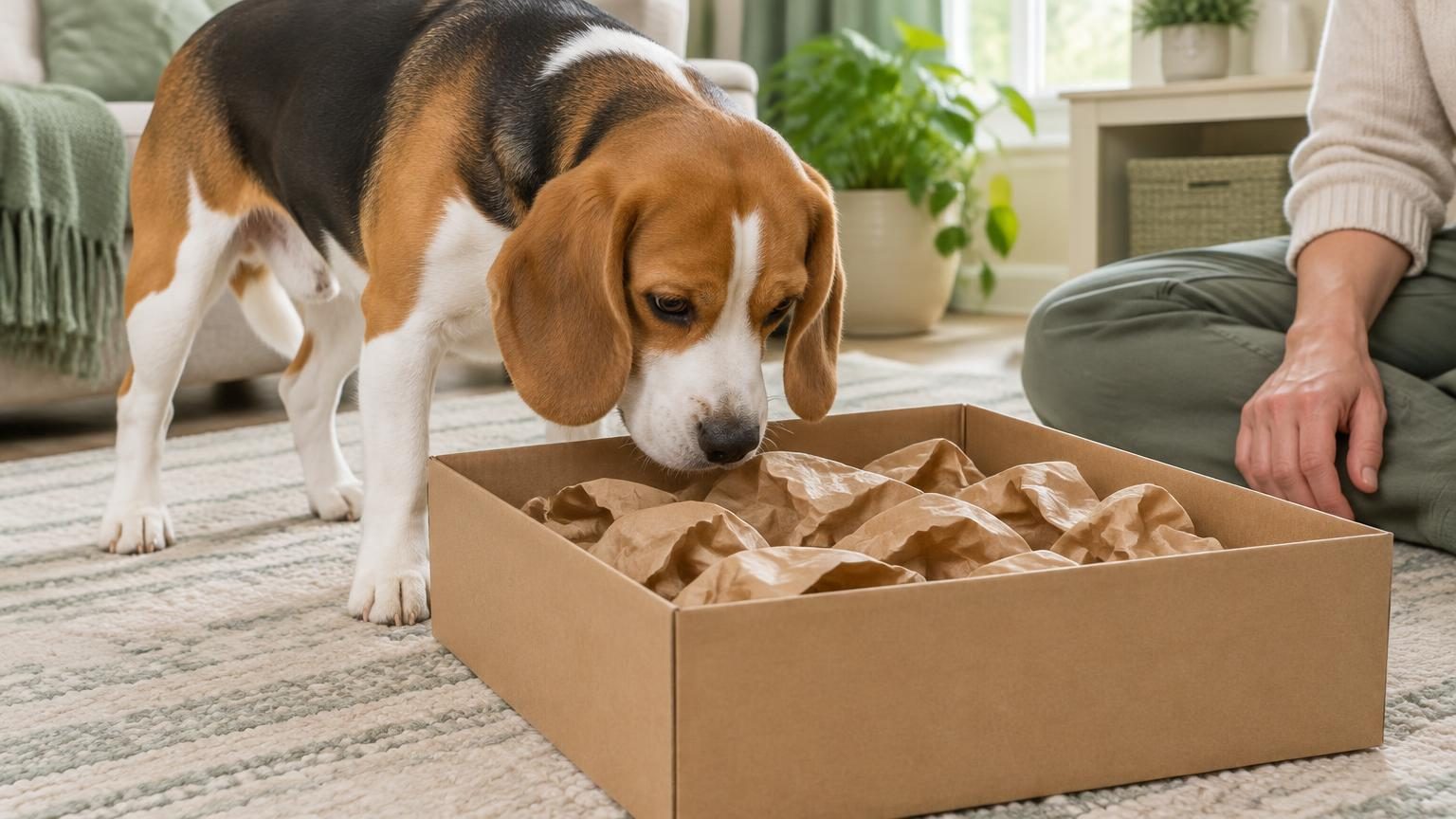
Give the nose a job without making every day harder
Beagles were developed as scent hounds, so opportunities to investigate smells are a natural starting point for enrichment. That does not mean every Beagle needs a difficult puzzle or constant entertainment. The goal is satisfying, achievable activity followed by comfortable rest—not an exhausted dog.
Mental activity complements walking, play, company and sleep; it does not replace them. Start with one easy game and watch how your dog responds. For an overview of those other needs, read the complete Beagle care guide. A dog who cannot settle is not necessarily asking for another challenge.
Choose the activity for the dog in front of you
Consider age, experience, mobility and how your Beagle handles objects. A dog who gently searches may enjoy a paper-filled box; a dog who swallows paper needs a different activity. A puppy who loses interest after a few successes may need a nap rather than a harder game.
Set up in a calm space without competition from children or other pets. Use some of the dog’s measured meal where suitable, and count additional treats rather than scattering unlimited snacks. Start when your dog is comfortable and interested. If they are ill, sore or unusually withdrawn, seek veterinary advice instead of treating enrichment as the solution.
Game 1: an easy find-it search
Begin on a clean, open floor with a few pieces of suitable food placed where your Beagle can see them. Say “find it” once and allow the dog to sniff and collect them. You are building an association between the cue and searching, not testing how well they can solve a mystery.
After several easy successes, place a piece just behind a chair leg or at the edge of a washable mat while your dog watches. Keep hiding places at an accessible height and away from cables, furniture gaps or objects you do not want searched. Never put food inside shoes or on kitchen counters and then expect the dog to distinguish a game from ordinary scavenging.
- Choose a small area and remove hazards first.
- Place a few pieces while the dog waits comfortably with help if needed.
- Release them to search without repeatedly pointing or repeating the cue.
- End after achievable successes and collect any missed food.
Game 2: a supervised scent box
A shallow open box can provide a low-cost search activity for a dog who does not eat cardboard or paper. Remove tape, staples, labels and handles. Start with an almost empty box and visible food; add a little loosely crumpled plain paper only if your dog searches safely.
Stay close enough to intervene. Remove the setup if your Beagle starts swallowing material, tearing it obsessively or becoming frustrated. Never wrap food in closed packaging or leave this game available when you go out. A food search on an open floor is a better alternative for a dog who chews containers.
Game 3: a puzzle that is easy enough to solve
Use a simple food toy with openings your Beagle can access without biting off parts. Show the easiest version first: some puzzles allow lids to stay open or food to be reached without moving every piece. Increase only one difficulty at a time.
Inspect the toy before and after use and wash it according to the instructions. Choose a size and design suited to your dog’s mouth and chewing style. The puzzle toy buying guide compares common types; it is not a ranking of tested brands. Pawing harder, barking repeatedly or chewing the mechanism is a reason to simplify or end the session.
Game 4: a short training challenge
Training can be an enjoyable problem-solving activity when the answer is clear and rewards arrive promptly. Practise a hand target, moving to a mat or looking back at you after sniffing. Use a few repetitions and stop while your Beagle is still engaged.
For a hand target, hold your open hand near the nose. When the dog investigates and touches it, mark and reward. Move the hand only a little at first; do not turn an easy game into repeated failures. Our puppy training guide explains marking, reward timing and gradual distractions. These same reward-based principles suit adult beginners.
Let walks include controlled investigation
A sniff-friendly walk need not cover a long distance. Pause in safe places, let your Beagle explore and reward voluntary check-ins. Keep control near roads, livestock and wildlife; enthusiasm for a smell is not evidence of dependable recall.
If using a long line, attach it to a well-fitted harness, use a suitable open area and supervise its movement. Avoid wrapping it around hands, allowing tangles with other dogs or giving enough run-up for a sudden hard stop. A long line is a management tool, not permission to let a dog chase. For physical activity questions, see Beagle exercise guidance and ask your vet about your individual dog.
Build a realistic daily rhythm
Rotate activities rather than offering everything at once. One day might include a small find-it search after breakfast, an unhurried sniffing opportunity during a walk and a few easy training repetitions later. Another day may be quieter. The example is a flexible plan, not a prescribed quota.
You do not need to increase difficulty every week. Repeating an enjoyable easy task can be satisfying. Keep track of what your Beagle chooses willingly and which setups lead to frustration. Put games away afterwards so food leftovers, torn materials and toys do not become unsupervised hazards.
| What you notice | A useful adjustment | Safety priority |
|---|---|---|
| Searching gently | Keep the game easy and repeat | Collect missed food afterwards |
| Chewing the container | Switch to an open-floor search | Remove damaged or swallowable material |
| Giving up quickly | Show an easier version or offer rest | Do not push repeated failures |
| Guarding food or objects | Separate animals and stop reaching in | Seek qualified help with guarding |
Protect rest and recognise limits
More enrichment is not always better. Give your dog a quiet place to rest and avoid waking them to complete a schedule. A calm dog can enjoy familiar activities without needing constant novelty.
Food games are not a treatment for separation anxiety, pain or compulsive behaviour. If your Beagle panics when left alone, consult the separation-related distress guide and seek professional support. If they guard resources, do not try to prove a point by taking items away; manage the environment and ask for reward-based behavioural help.
Keep food and shared spaces safe
Use suitable food your dog already tolerates rather than introducing rich mixtures for entertainment. Check ingredient labels; xylitol is dangerous to dogs, so never assume a spread marketed for people is suitable. If your dog has dietary restrictions, ask your vet which rewards fit the plan.
Supervise food activities and separate pets when necessary. Keep children away from a dog eating or investigating a food toy. If a dog swallows part of a toy or unsafe material, contact your vet promptly rather than waiting to see whether the game has caused a problem.
Frequently Asked Questions
Can mental enrichment replace walks?
No. It complements physical activity, toileting, social contact and rest. Adapt walks to the dog’s health and abilities with your vet’s guidance.
Does my Beagle need a new puzzle every week?
No. Repeating an enjoyable, manageable activity is useful. Rotate a few safe options and judge by your dog’s response, not a shopping schedule.
What if my dog destroys every cardboard game?
Skip cardboard and paper activities. Use an open-floor search or another supervised option that does not encourage swallowing material.
Should a puzzle be difficult to be worthwhile?
No. An achievable search can be rewarding. Repeated frustration or chewing the mechanism means the setup needs changing.
References
Related Articles
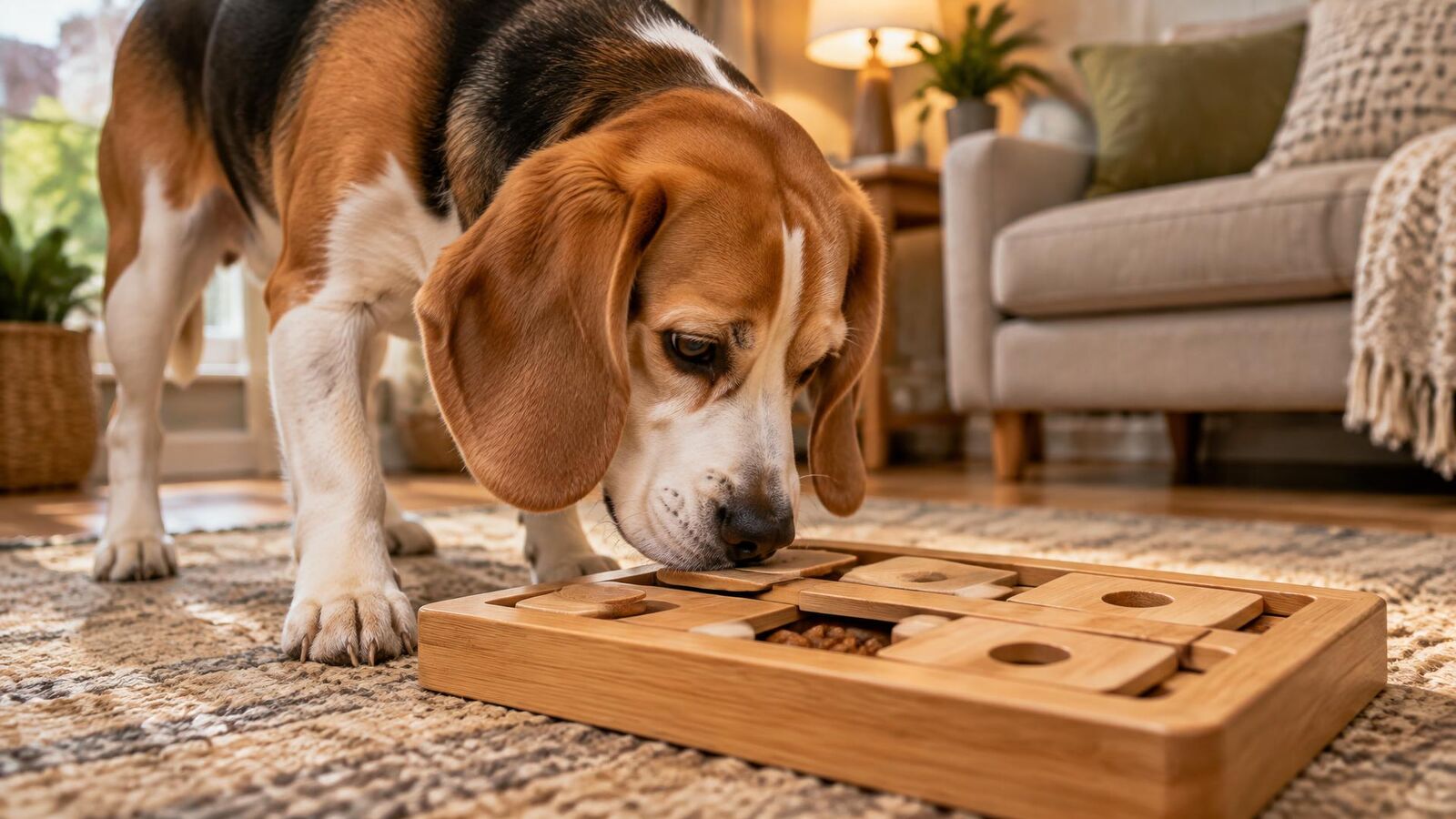
Best Types of Puzzle Toys for Beagles: A Practical Buying Guide
Snuffle mats, treat balls and sliding puzzles compared — how to pick the right difficulty, size and material for a scent-driven Beagle, and how to keep toys safe and clean.
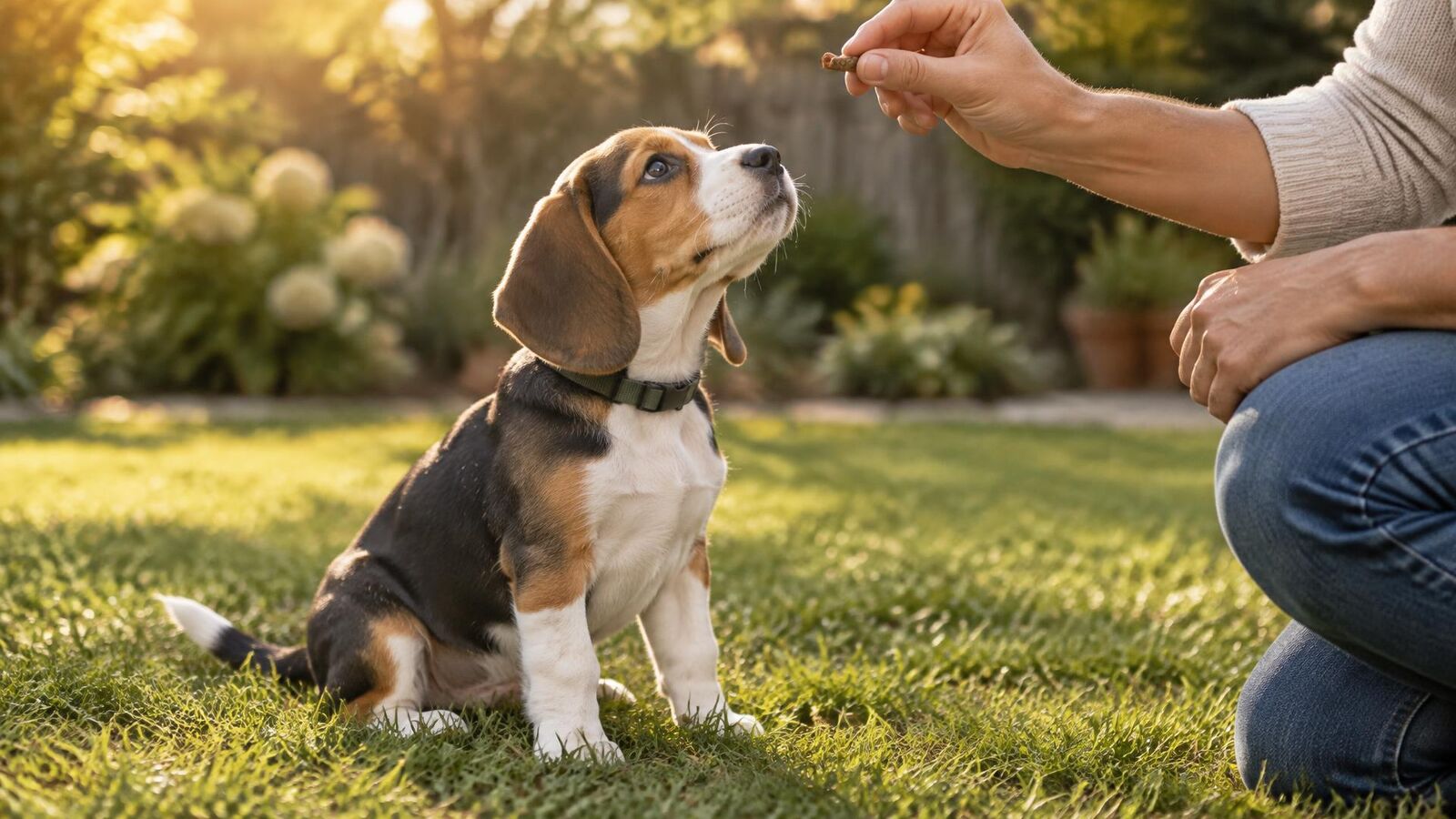
How to Train a Beagle Puppy: Step-by-Step
A calm, reward-based plan for name recognition, recall, basic cues, potty routines, leash manners and socialization — with a sample daily schedule built around a Beagle's nose.
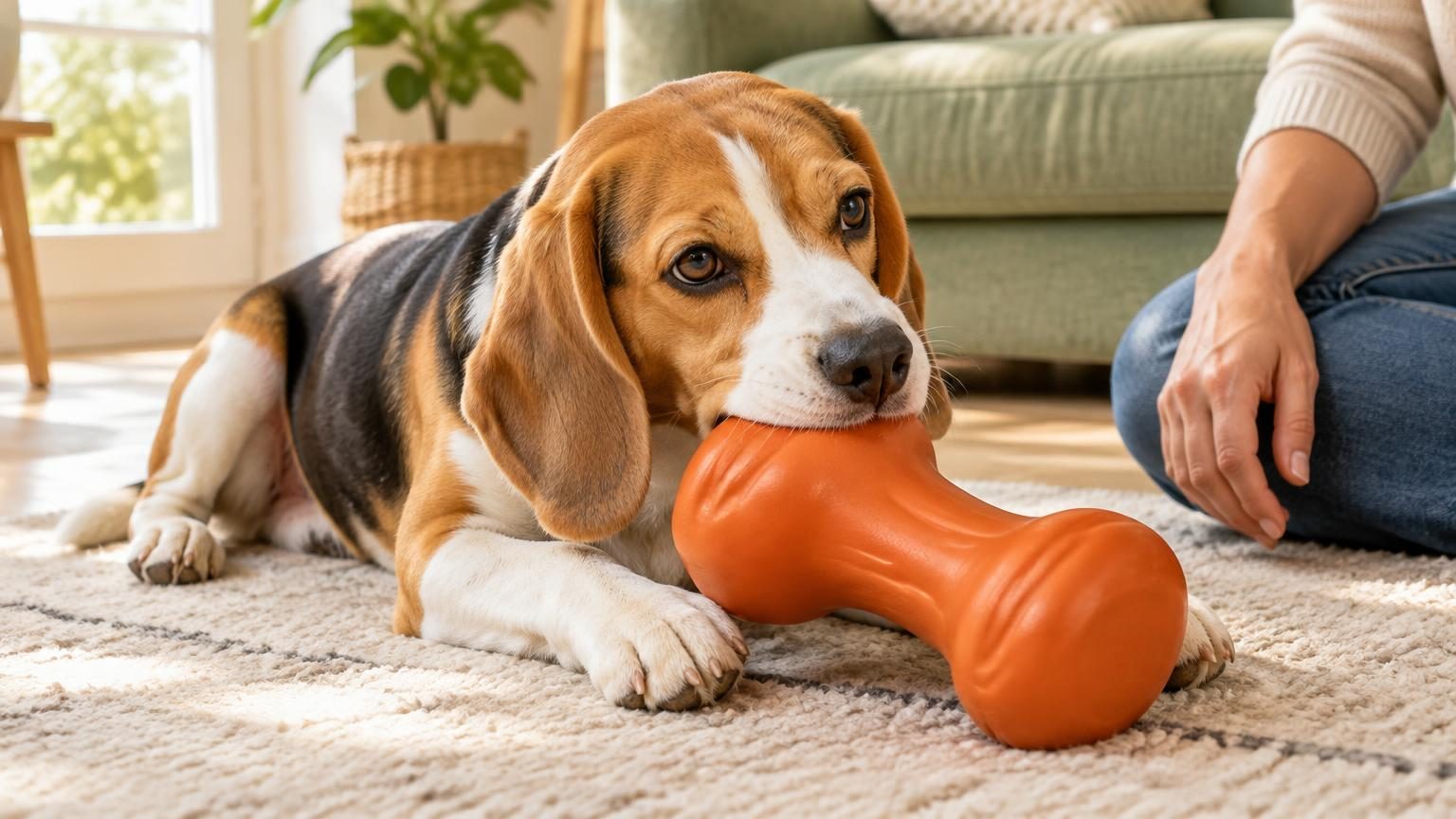
Best Types of Chew Toys for Beagles: A Safety-First Guide
Compare chew toy types by fit, flexibility and cleaning—not promises of indestructibility—and learn when to remove a damaged toy.