
Best Types of Chew Toys for Beagles: A Safety-First Guide
Compare chew toy types by fit, flexibility and cleaning—not promises of indestructibility—and learn when to remove a damaged toy.
6 min read
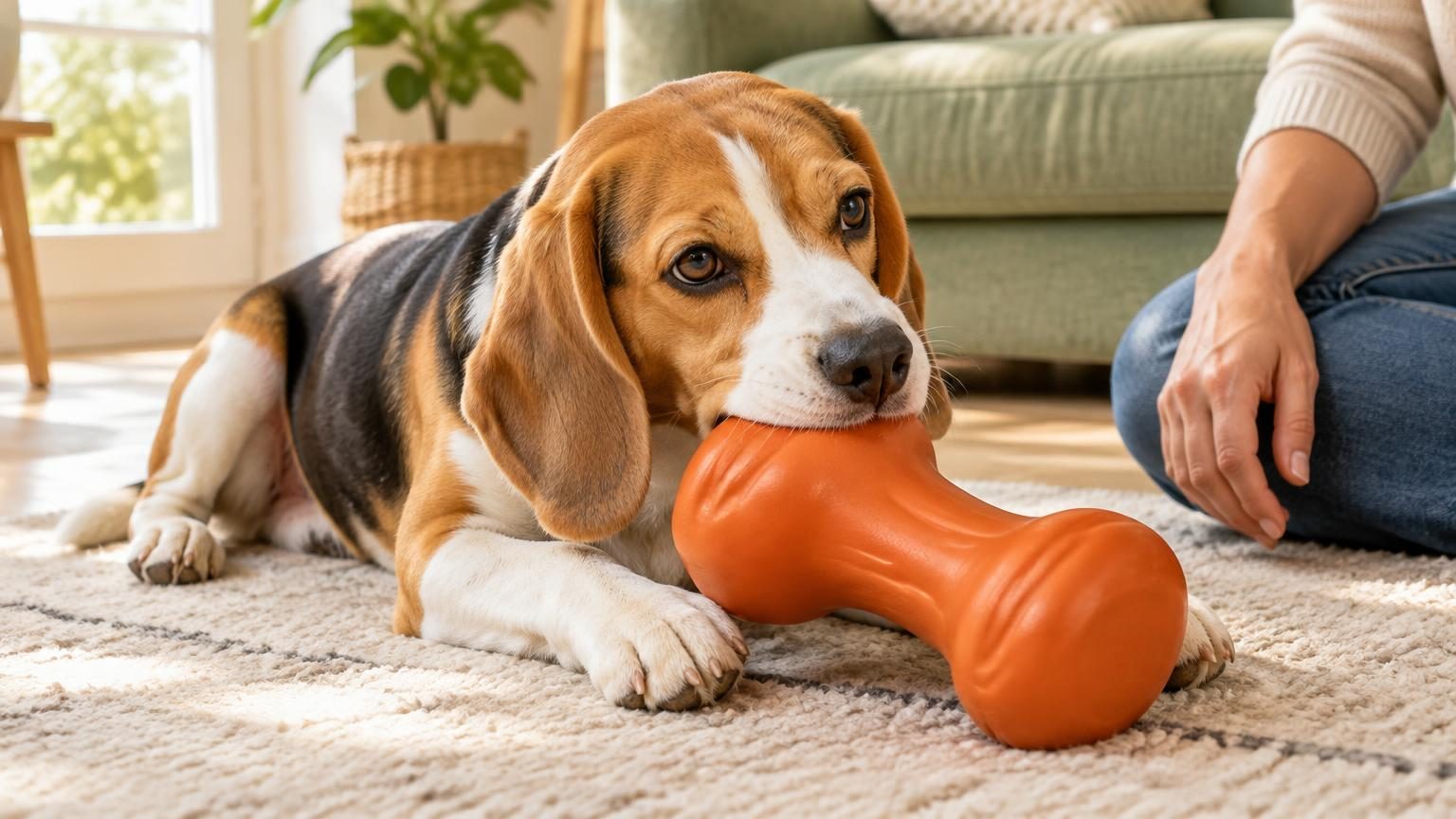
The best choice depends on how your Beagle chews
Some Beagles carry a toy and mouth it gently; others work on a seam until pieces come away. Breed labels and “tough” packaging cannot tell you which toy will be safe for your particular dog. Choose a sensible starting point, watch actual use and remove a toy that fails that test.
This guide compares types and selection criteria. It does not rank brands, report product testing or claim that any toy is indestructible. If your dog has dental disease, damaged teeth or a history of swallowing objects, ask your vet before introducing a new chew.
Start with size, construction and flexibility
Choose a toy too large to swallow whole and shaped so it is not likely to lodge in the mouth. Check the manufacturer’s size guidance against your dog’s actual mouth and behaviour. A large breed label is not a substitute for watching how a Beagle grips an item.
Look for some give in the material and avoid easily detached decorations, weak seams or pieces your dog can prise off. VCA’s practical screening advice includes checking whether a chew can be indented with a fingernail. This is not a safety certification, and a flexible toy can still be torn and swallowed.
- Inspect the complete toy before offering it: seams, openings, attachments and wear.
- Choose a comfortable size without treating “bigger” as automatically safe.
- Avoid very hard, non-bending chews and items that splinter.
- Check cleaning instructions and remove trapped food after use.
Compare common toy types
Use this comparison to narrow choices, then supervise a real trial with your dog. No category is safe for every chewing style.
| Type | Potential use | Main limitation | What to check |
|---|---|---|---|
| Flexible rubber chew | Mouthing and supervised chewing | Strong chewers may tear pieces off | Size, give, intact edges and openings |
| Stuffable rubber food toy | Combines food interest with handling | Food remains and damaged walls need attention | Accessible filling, cleaning and material condition |
| Soft fabric toy | Carrying and gentle interactive play | Stuffing and squeakers may be swallowed | Seams, detachable parts and your dog’s play style |
| Rope toy | Supervised interactive tug | Loose strands can be swallowed | Fraying, loose knots and immediate removal when damaged |
| Very hard bones, antlers or rigid chews | Often marketed for durability | Hardness can cause dental fractures | Avoid hardness-based “lasting longer” assumptions |
Flexible rubber: a reasonable first option
A sturdy, single-piece rubber design with some flexibility is often a practical place to start. Smooth rounded contours and accessible cleaning are useful features, but marketing language such as “power chewer” does not guarantee survival.
Offer it while you can watch closely. Notice whether your Beagle gently works the surface or repeatedly bites one thin point. Retire the toy if cracks open, a chunk loosens or the shape becomes small enough to swallow. Do not wait for a damaged part to go missing before taking action.
Food toys: separate chewing from solving
A stuffable toy can occupy a food-motivated Beagle, but start with an easy filling your dog can reach. A dog who cannot access the food may attack the container instead. Use suitable food from the normal allowance when possible and follow cleaning guidance.
Check ingredients before adding human foods; xylitol is toxic to dogs. For choosing challenge levels, read our puzzle toy guide. A food toy and a chew have overlapping uses, but neither becomes safe to leave unattended just because it contains food.
Fabric and rope: play tools, not automatic chew recommendations
A soft toy may suit a dog who carries objects without dismantling them. It is a poor choice for a dog who immediately opens seams, eats stuffing or targets a squeaker. Remove it at the first damage rather than cutting away pieces and assuming the rest is safe.
Use rope for supervised interactive play only if your dog does not swallow strands. Stop when it frays or knots loosen. Keep tug calm, allow breaks and avoid jerking the dog’s head or lifting them by the toy. If letting go becomes difficult, teach exchanges using rewards rather than forcing the toy from the mouth.
Why very hard does not mean very safe
Bones, antlers and other hard, non-bending objects can fracture teeth. A chew that barely changes shape may seem economical, but durability is not the only consideration. Rigid nylon-style products also deserve caution rather than a blanket recommendation.
Do not rely on the belief that chewing must hurt to clean teeth or that a dog’s enthusiasm proves an object is safe. Ask your vet about dental care suited to your dog. Toys are not a replacement for a dental assessment or an individually advised oral-care routine.
Run a short, supervised trial
Offer a new toy in a calm area without competition. Watch how your dog grips it, whether they try to swallow it and which part they target. Keep the trial manageable and end while you can safely exchange the toy for a reward.
Inspect again after use. For example, if a Beagle concentrates on a rubber rim and leaves tooth cuts that deepen each session, retire that toy before a piece breaks off. Take notes about what failed—size, shape or construction—so the next purchase is informed rather than simply more expensive.
Rotate for interest, not endless availability
Keep a small collection of suitable toys and vary supervised opportunities. Store food toys clean and dry, and check items each time they return to use. Rotation can refresh interest, but an old damaged toy does not become suitable because it has been out of sight.
Chewing is only one outlet. A sniffing walk, a simple search or a short training session may suit a dog who becomes overexcited with objects. Try the activities in our mental stimulation guide and use the complete care guide to balance play with rest and daily needs.
Know when to stop and seek help
Remove toys with loose pieces, exposed filling, deep splits, sharp edges or frayed fibres. If a part is missing and may have been swallowed, contact your vet promptly with the toy details. Do not induce vomiting or assume a swallowed piece will pass without professional advice. Breathing difficulty or choking needs emergency veterinary care.
New chewing changes, mouth pain or difficulty eating warrant veterinary advice. If your dog guards toys, prevent competition and do not grab items to demonstrate control. A qualified reward-based professional can help with safe exchanges and management. This is general safety guidance, not a diagnosis or a treatment plan.
Frequently Asked Questions
Are any chew toys truly indestructible?
Do not rely on that promise. Toys vary and individual dogs use them differently. Inspect before and after each session and remove damage promptly.
Can I leave a new chew toy with my Beagle when I go out?
Not on the assumption that it is durable. Supervised trials come first, and no unfamiliar toy should be treated as a guarantee of safe unsupervised chewing.
Are antlers better because they last longer?
Lasting longer does not establish safety. Very hard chews can fracture teeth; ask your vet about suitable options rather than choosing by hardness.
What if my Beagle swallows part of a toy?
Contact your vet promptly, explain the size and material and follow their instructions. Do not attempt home treatment or wait for symptoms to prove a problem.
References
Related Articles
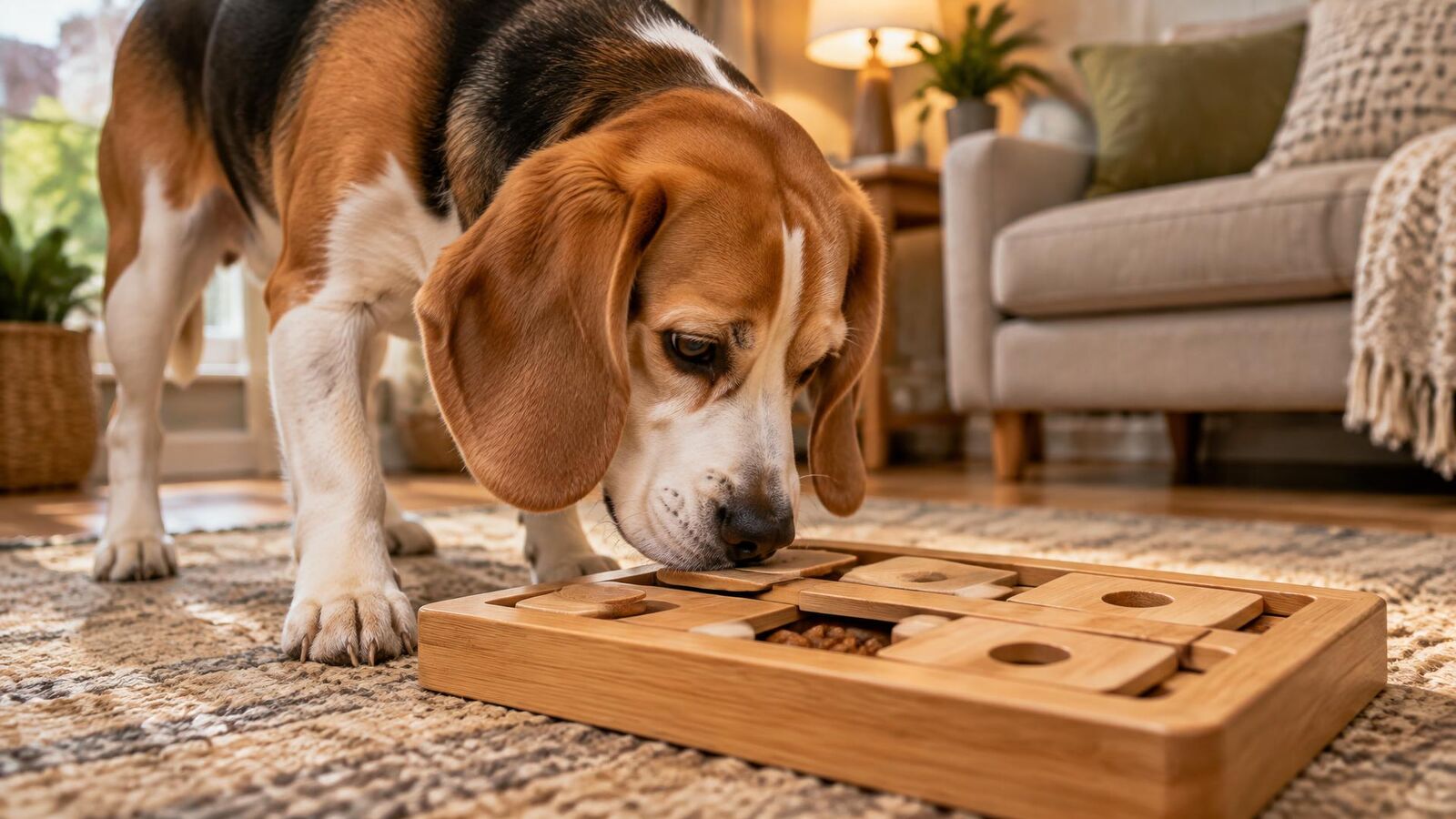
Best Types of Puzzle Toys for Beagles: A Practical Buying Guide
Snuffle mats, treat balls and sliding puzzles compared — how to pick the right difficulty, size and material for a scent-driven Beagle, and how to keep toys safe and clean.
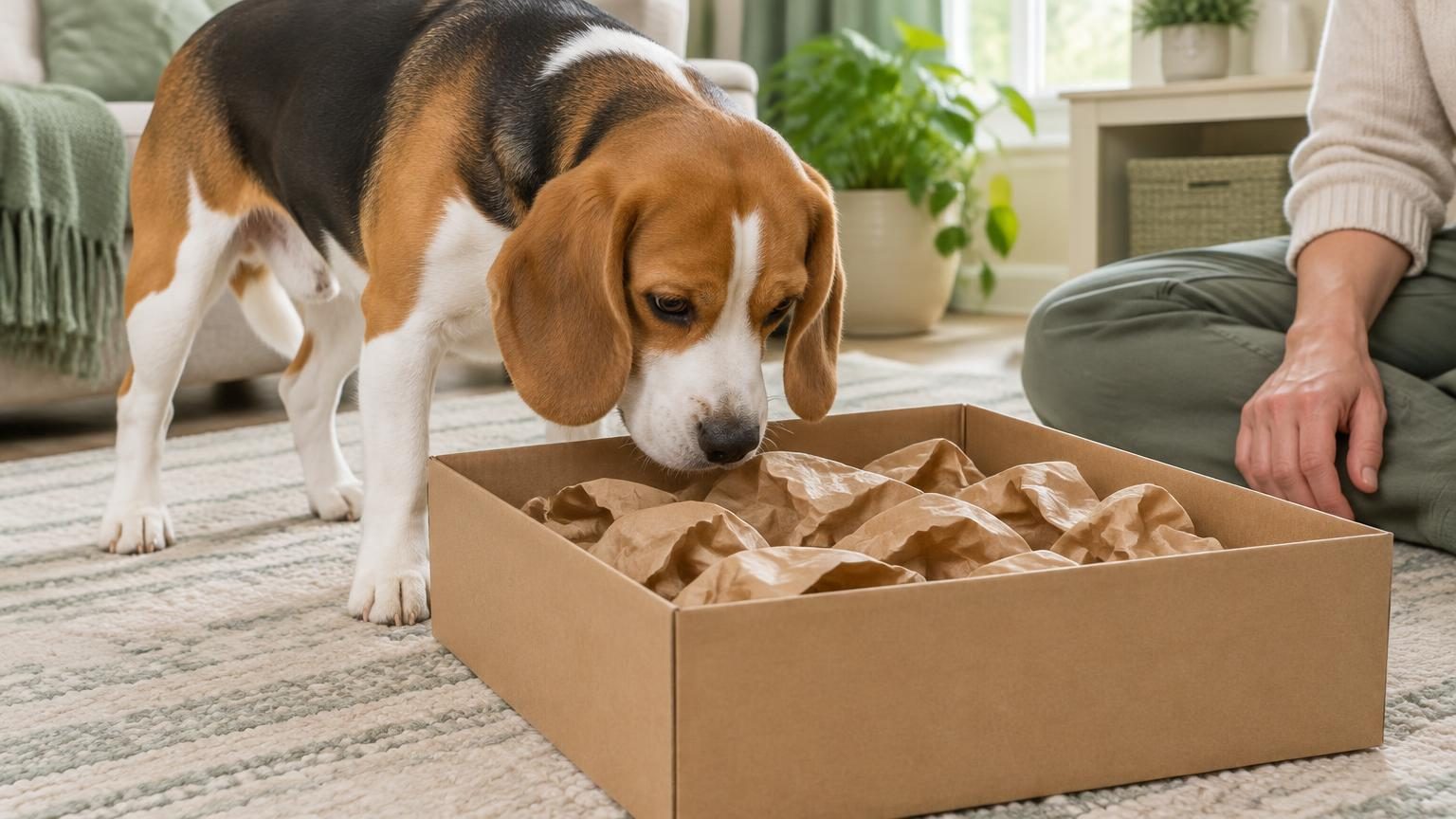
How to Keep Your Beagle Mentally Stimulated
Simple scent games, achievable food puzzles and short training sessions for a curious Beagle—with time to relax between activities.
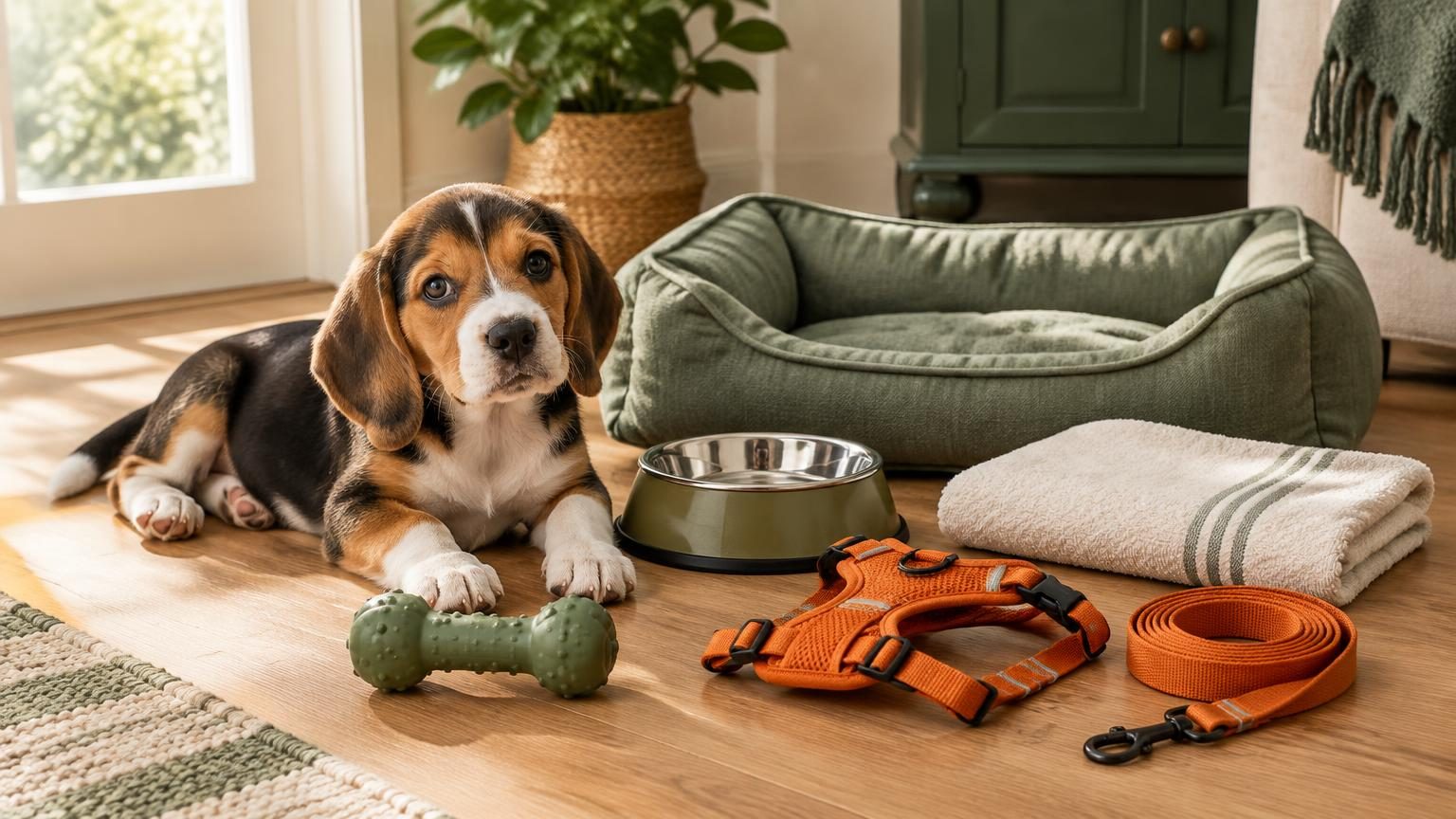
Essential Supplies for a New Beagle Puppy
A practical first-week checklist: secure your home, choose comfortable basics and spend on what your nose-led puppy actually needs.