
The Complete Beagle Care Guide for Beginners
What daily life with a Beagle really involves — temperament, exercise, feeding, grooming, training, home safety and vet care — plus the mistakes new owners make most often.
7 min read

Who this guide is for
This guide is for people who have just brought a Beagle home or are seriously considering one. It covers the everyday routines that make the biggest difference to a Beagle's happiness and your own: how they think, how much activity they need, how to feed and groom them, and how to set up your home. It is educational and does not replace advice from your veterinarian, who knows your individual dog.
Understanding Beagle temperament
Beagles were developed as scent hounds that hunted in packs. That history explains most of what owners notice day to day. A Beagle is usually sociable, cheerful and curious, but also strongly guided by its nose and by food.
In practice this means a Beagle may ignore you completely when it finds an interesting smell, even if it knows a cue well indoors. This is not stubbornness in the human sense; the scent is simply more rewarding at that moment. Planning around this — rather than fighting it — is the key to living well with the breed.
Because they were bred to work alongside other dogs, many Beagles enjoy company and some find long periods alone difficult. How well a dog copes with being home alone varies a great deal between individuals and depends on age, history, routine and how gradually alone time was introduced. Most Beagles do not have separation anxiety, but boredom can lead to barking or chewing, so plan for company, enrichment or a midday break on long days.
- Friendly with people and often with other dogs
- Highly food-motivated, which helps training but encourages food theft
- Follows scents with intense focus
- Vocal: barking and the characteristic baying howl are normal breed traits
Exercise and enrichment
Most healthy adult Beagles need daily physical activity plus regular mental work. Two walks a day with time to sniff, combined with some play, suits many adults, but the right amount depends on age, health and fitness — ask your vet if you are unsure.
Sniffing is not wasted time on a walk. For a scent hound, following a trail is mentally tiring and satisfying. A long line (a lightweight lead several metres long) attached to a harness lets your Beagle explore safely in open spaces without the risk of running off.
Mental enrichment matters as much as mileage. A Beagle that walks for an hour but spends the rest of the day with nothing to do may still be restless. Rotate a few simple activities through the week.
- A slow 'sniff walk' where your dog chooses the pace
- Scatter feeding part of a meal in the garden or on a snuffle mat
- Hide-and-seek scent games indoors — see our guide to keeping your Beagle mentally stimulated
- Five-minute training sessions for new tricks
Feeding fundamentals
Beagles are famous for their appetite, and many will happily eat more than they need. Measured meals help you stay in control of their weight. Choose a complete and balanced food appropriate for your dog's life stage, and use the manufacturer's feeding guide as a starting point rather than a fixed rule.
Weigh food with a kitchen scale instead of using a scoop by eye, and count training treats as part of the daily total. Ask your vet to assess your dog's body condition at check-ups and adjust portions with their guidance.
For puppies, read our Beagle puppy feeding guide; it explains meal frequency in the first months.
- Avoid free feeding (leaving food down all day)
- Store food bags and bins where a Beagle cannot reach or open them
- Keep human food off counters and tables — Beagles are skilled thieves
- Learn which human foods and plants are dangerous to dogs and keep them out of reach; the ASPCA Animal Poison Control Center keeps a public list
Grooming routines
The Beagle's short, dense coat is low-maintenance but still sheds. A weekly brush with a rubber curry brush or a bristle brush removes loose hair and lets you check the skin. Brush more often during heavier seasonal shedding.
Ears deserve special attention. A Beagle's long, hanging ears reduce airflow, so check them weekly. Healthy ears look clean and do not smell unpleasant. Redness, a strong odour, discharge or frequent head shaking are reasons to contact your vet rather than to treat at home.
How often nails need trimming depends on how fast they grow and how much they wear down on walks; dogs that walk mostly on grass or carpet usually need trims more often. Clicking on hard floors is a common sign that nails are long. If you are unsure how short to cut, ask your vet or a groomer to show you. Bathe only when needed using a dog-specific shampoo. Our Beagle grooming guide covers each task step by step.
Training basics
Beagles learn quickly when training is short, positive and food-based. Sessions of five to ten minutes, once or twice a day, usually work better than one long session. Reward the behaviour you want the moment it happens.
Prioritise three foundations: responding to their name, a reliable recall, and walking on a loose lead. Because of the breed's strong nose, recall should be practised in secure areas for a long time before you trust it in open spaces, and many owners keep their Beagle on a lead or long line outdoors permanently.
Avoid punishment-based methods. They can damage trust and increase stress, and they do not teach the dog what you want instead. Our step-by-step guide to training a Beagle puppy explains a full beginner plan.
Home environment and safety
A Beagle's nose and curiosity make good management essential. Think of your home the way you would for a toddler who can smell food through a cupboard door.
- Check fences for gaps and digging spots; Beagles can squeeze through surprisingly small spaces
- Use lidded bins or keep bins inside a cupboard
- Store medicines, cleaning products, chocolate and sugar-free gum well out of reach
- Provide a quiet resting place, such as a bed or crate, where your dog will not be disturbed
- Make sure your dog wears identification and is microchipped where required by local law
Preventive veterinary care
Register with a vet soon after your Beagle arrives and book an initial check-up. Your vet will advise on vaccinations, parasite prevention, neutering decisions and dental care for your dog's age and the area you live in.
Keep a simple health record: vaccination dates, parasite treatments, weight at each visit and any concerns. Regular weigh-ins are especially useful for a breed that gains weight easily.
Contact your vet promptly if you notice changes in appetite, energy, toileting, breathing or behaviour. Our overview of common Beagle health concerns explains topics often discussed for the breed. It is educational and cannot diagnose or treat any condition.
Common mistakes new owners make
- Trusting recall off-lead too early in unfenced areas
- Estimating food portions and forgetting to count treats
- Leaving a new Beagle alone for long stretches before building up alone time gradually — if your dog shows signs of distress when alone, see our separation anxiety tips
- Treating howling and barking as defiance instead of meeting the underlying need
- Skipping weekly ear checks
New owner checklist
Use this list in your first weeks together:
- Book a first vet appointment and set up a health record
- Buy a well-fitted harness, lead, collar with ID tag and a long line
- Set up a bed or crate in a calm area
- Choose a complete food and a kitchen scale for portions
- Plan daily walks with sniffing time
- Start short daily training sessions
- Secure bins, food storage and garden gaps
- Add a few safe chew toys and one food puzzle — see essential supplies for a new Beagle puppy
Frequently Asked Questions
Are Beagles good for first-time owners?
They can be, if you are ready for daily exercise, consistent training and secure fencing. Their friendliness is a big plus; their nose-led independence is the main challenge.
Can a Beagle be left alone during the workday?
It depends on the individual dog. Some adult Beagles settle well for part of a day once alone time has been built up gradually; others need a midday walk, a dog walker or company. Talk to your vet or a qualified behaviourist if your dog seems distressed when alone.
How often should I check my Beagle's ears?
Once a week is a sensible routine. Contact your vet if you see redness, discharge or a strong odour.
References
Related Articles
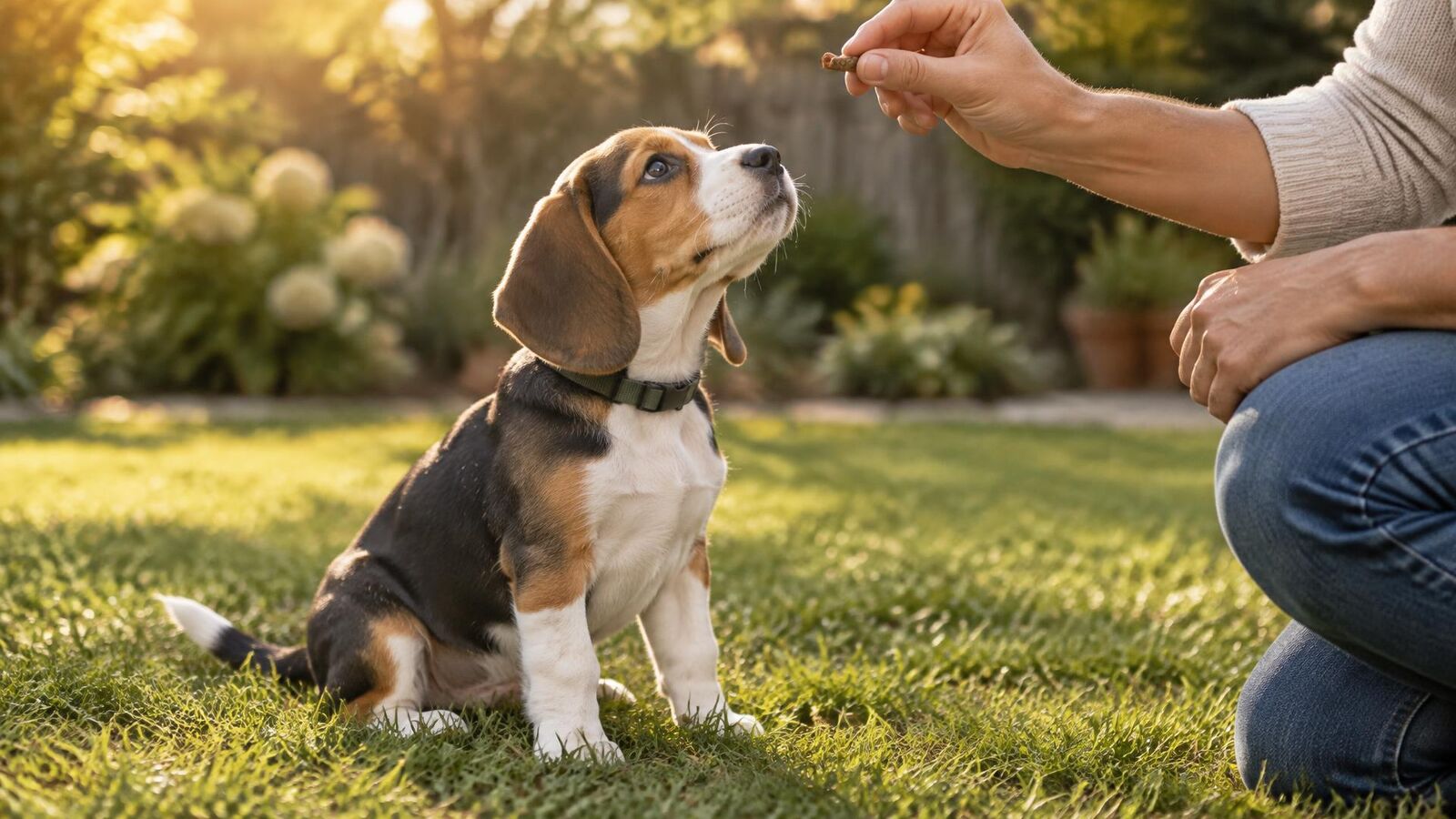
How to Train a Beagle Puppy: Step-by-Step
A calm, reward-based plan for name recognition, recall, basic cues, potty routines, leash manners and socialization — with a sample daily schedule built around a Beagle's nose.
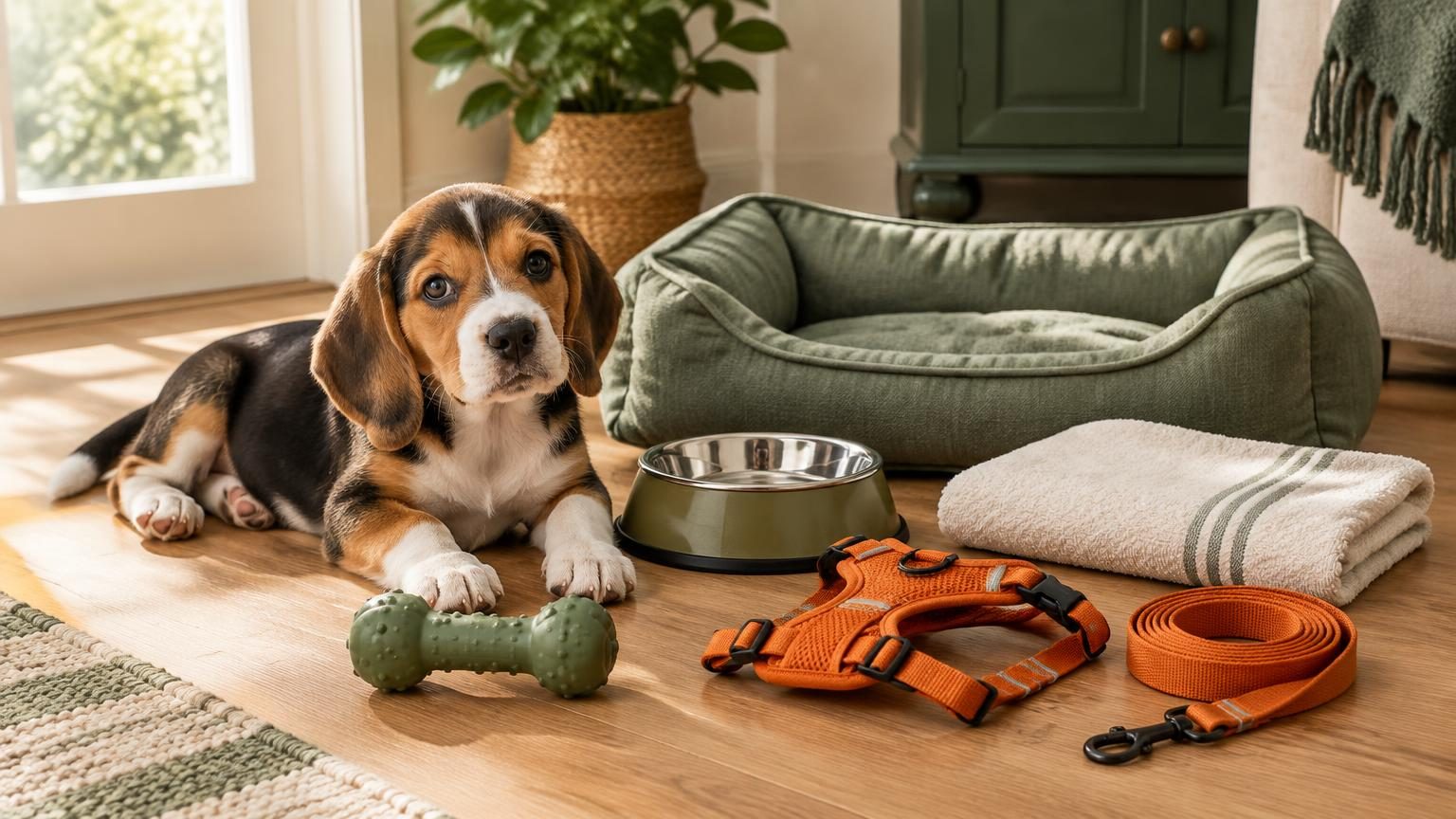
Essential Supplies for a New Beagle Puppy
A practical first-week checklist: secure your home, choose comfortable basics and spend on what your nose-led puppy actually needs.
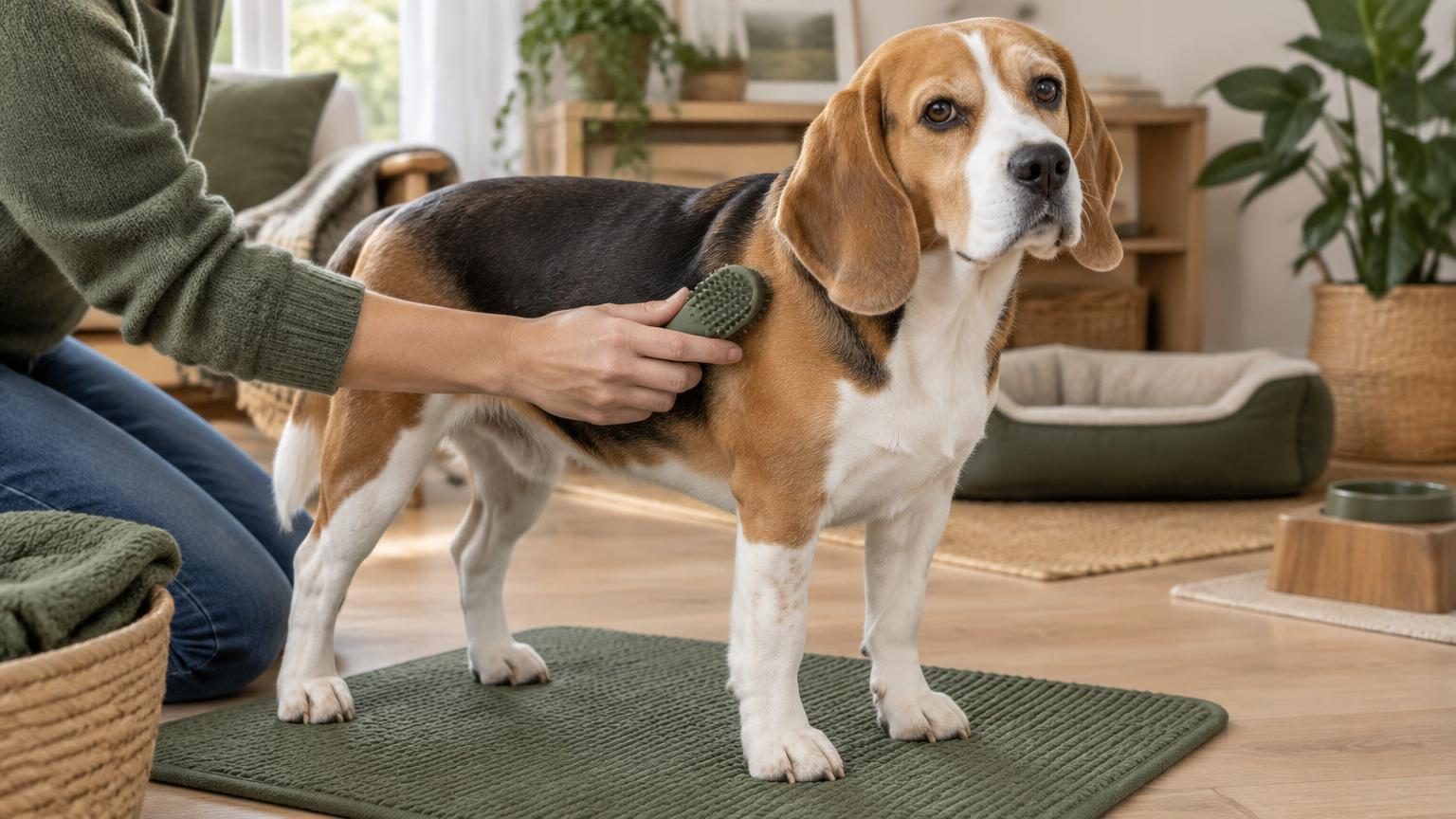
Beagle Grooming Guide: Coat, Ears, Nails and Calm Handling
A manageable grooming routine for a short-coated Beagle, with gentle handling, useful tools and clear limits on what to do at home.