
How to Train a Beagle Puppy: Step-by-Step
A calm, reward-based plan for name recognition, recall, basic cues, potty routines, leash manners and socialization — with a sample daily schedule built around a Beagle's nose.
6 min read
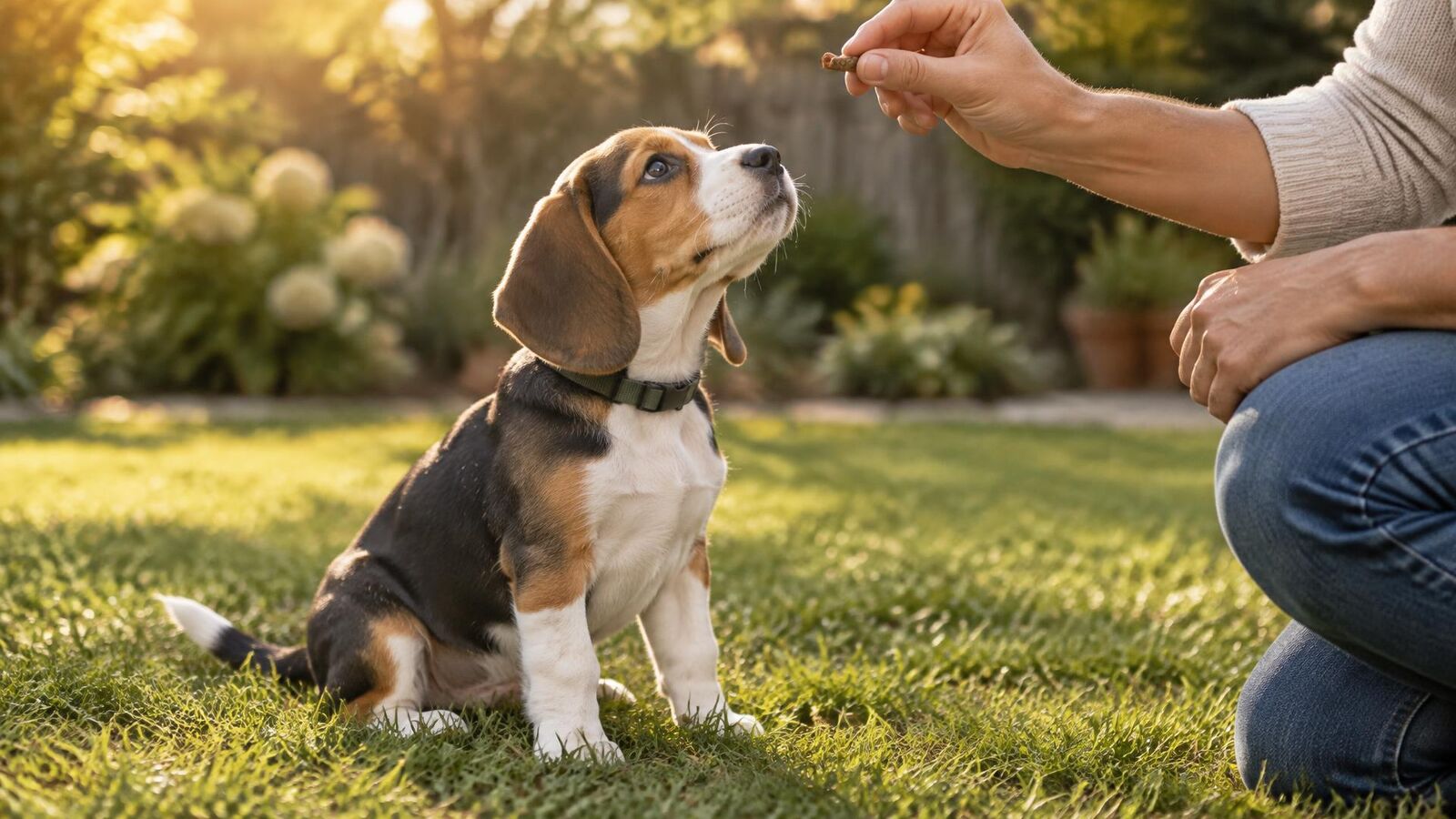
Set realistic expectations
Beagle puppies are bright and eager for food, which makes early training rewarding. They are also easily distracted, especially by smells, and their attention span is short. Progress will rarely be a straight line: a puppy that sits perfectly in the kitchen may seem to forget everything in the garden.
That is normal. Dogs do not automatically generalise a cue to new places, so each new environment is a fresh lesson. Aim for many short, successful sessions rather than occasional long ones, and judge progress over weeks rather than days.
How positive reinforcement works
Positive reinforcement means adding something your puppy likes — usually a small, tasty treat — immediately after the behaviour you want. Behaviours that are rewarded become more likely to happen again.
Many trainers use a marker: a short word such as "yes" or a clicker sound that tells the puppy the exact moment it got it right, followed by the treat. Use tiny, soft treats and subtract them from your puppy's daily food allowance.
Avoid physical corrections, shouting or rough handling. The American Veterinary Society of Animal Behavior states in its Position Statement on Humane Dog Training that reward-based methods should be used for all dog training and that aversive methods should not be used.
Step 1: Name recognition
In a quiet room, say your puppy's name once in a happy voice. The moment they look at you, mark and reward. Repeat five times, then stop. Do this several times a day.
Avoid repeating the name over and over or using it when you are cross. You want the name to mean 'look at me, something good is coming'.
Step 2: Recall foundations
Recall is the most important safety skill for a scent hound — and the hardest. Start indoors, a few steps away, with a cheerful cue such as "come". Reward generously with something better than usual when your puppy arrives.
Gradually add distance, then move to a secure garden. Play 'ping-pong' recall with another family member, calling the puppy back and forth.
Never call your puppy to do something unpleasant, such as nail trimming, and never punish them when they come back, even if they were slow. In open spaces, use a long line until recall is reliable around distractions; with many Beagles this takes a long time, and some owners keep a line on permanently.
Use a long line safely: clip it to the back ring of a well-fitted harness, never to a collar, so a sudden stop cannot jerk your puppy's neck. Choose a lightweight line suited to a puppy's size, hold it in a loose loop rather than wrapping it around your hand, and keep it from tangling around legs. Always supervise a puppy on a long line and use it in open areas away from roads.
Step 3: Sit, down and wait
Sit: hold a treat at your puppy's nose and slowly move it up and back. As their bottom touches the floor, mark and reward. After a few successful repeats, make the same hand movement without a treat in it and reward from your other hand. Add the word "sit" once the movement reliably works.
Down: from a sit, lower a treat slowly to the floor between the front paws. Mark and reward when the elbows touch the ground.
Wait: ask for a sit, pause for one second, then reward. Build to longer pauses and small steps away. A short wait before meals and doorways is a useful everyday habit.
Step 4: Potty training routines
House training is mostly about timing and supervision. Take your puppy to the same outdoor spot after waking, after eating, after play and before bed, and reward calmly the moment they finish.
Clean any indoor accidents with an enzyme cleaner and never scold — it teaches a puppy to hide when toileting. Our full guide on how to potty train a Beagle puppy covers schedules and setbacks.
Step 5: Leash training
Let your puppy wear a lightweight harness indoors for short periods first, rewarding them for calm behaviour. Then attach the lead and practise in the house or garden.
Reward your puppy whenever they are beside you with a loose lead. If the lead goes tight, stop and wait. When the lead slackens, move on. Use sniff breaks as a reward: say "go sniff" and let them explore for a few seconds. For a Beagle, the chance to smell is often worth more than a treat.
Our guide to the best harnesses for Beagles explains how to check the fit.
Step 6: Socialization
Socialization means helping your puppy have calm, positive experiences with the people, animals, sounds, surfaces and places they will meet in life. The first three months of life are an especially important window. The American Veterinary Society of Animal Behavior's Position Statement on Puppy Socialization recommends that safe socialization begin before vaccinations are complete.
Until your vet confirms your puppy is fully protected, keep socialization safe: carry your puppy or use a pram in busy places, avoid areas where unknown dogs toilet, such as parks and pavements, meet only healthy, fully vaccinated adult dogs you know, and consider a puppy class that requires first vaccinations and cleans its floors. Ask your vet about local disease risks.
Quality matters more than quantity. Let your puppy observe from a comfortable distance and pair new experiences with treats. If your puppy backs away, hides or freezes, increase distance and slow down.
- Different people: hats, beards, children, people with umbrellas
- Household sounds: vacuum cleaner, doorbell, washing machine
- Car journeys and handling of paws, ears and mouth
- Calm, fully vaccinated, dog-friendly adult dogs you know
Managing distractions
Raise difficulty one step at a time. Change only one thing at once: distance, duration or distraction. If your puppy fails twice in a row, make the exercise easier and finish on a success.
Outdoors, start practice at quieter times and places. Carry higher-value treats for harder environments and expect your Beagle's nose to win sometimes.
Common mistakes
- Sessions that are too long — stop while your puppy is still keen
- Repeating cues several times so the puppy learns to wait for the third one
- Allowing off-lead freedom before recall is reliable
- Accidentally rewarding jumping or whining with attention
- Expecting indoor skills to work instantly outdoors
Example daily training schedule
Adapt this to your puppy's age, energy and your household. Each session lasts about five minutes.
- Morning: potty trip, then name recognition and sit before breakfast
- Mid-morning: short indoor recall game
- Lunchtime: potty trip, leash practice in the garden
- Afternoon: one new socialization experience at a comfortable distance
- Early evening: down and wait, then a food puzzle with part of dinner
- Before bed: calm potty trip and quiet time
Frequently Asked Questions
When should I start training my Beagle puppy?
Gentle training can start the day your puppy comes home. Keep sessions very short and fun.
Will my Beagle ever be reliable off lead?
Some Beagles develop a strong recall in familiar places, but the breed's scent drive makes off-lead walking in unfenced areas risky. A long line is a safe compromise.
Should I join a puppy class?
A well-run, reward-based class can help with socialization and skills. Ask about the trainer's methods before you enrol.
References
Related Articles
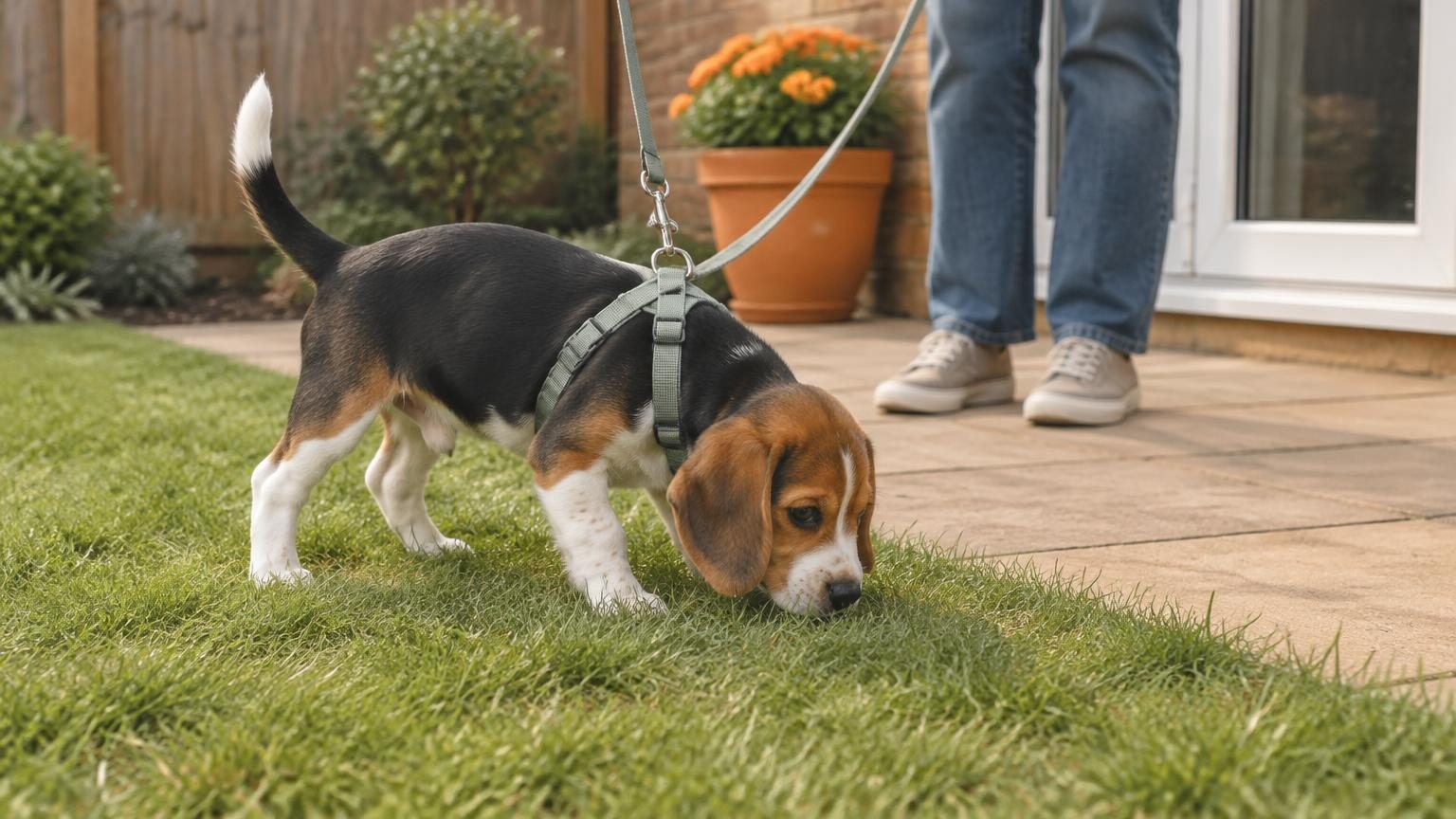
How to Potty Train a Beagle Puppy: A Practical Routine
Build reliable toilet habits with well-timed outings, immediate rewards and a routine that adapts to your individual Beagle puppy.
How to Stop a Beagle From Barking Excessively: A Humane Plan
Identify what triggers your Beagle’s barking, reduce avoidable rehearsals and teach calmer alternatives without punishment or promises of a silent dog.
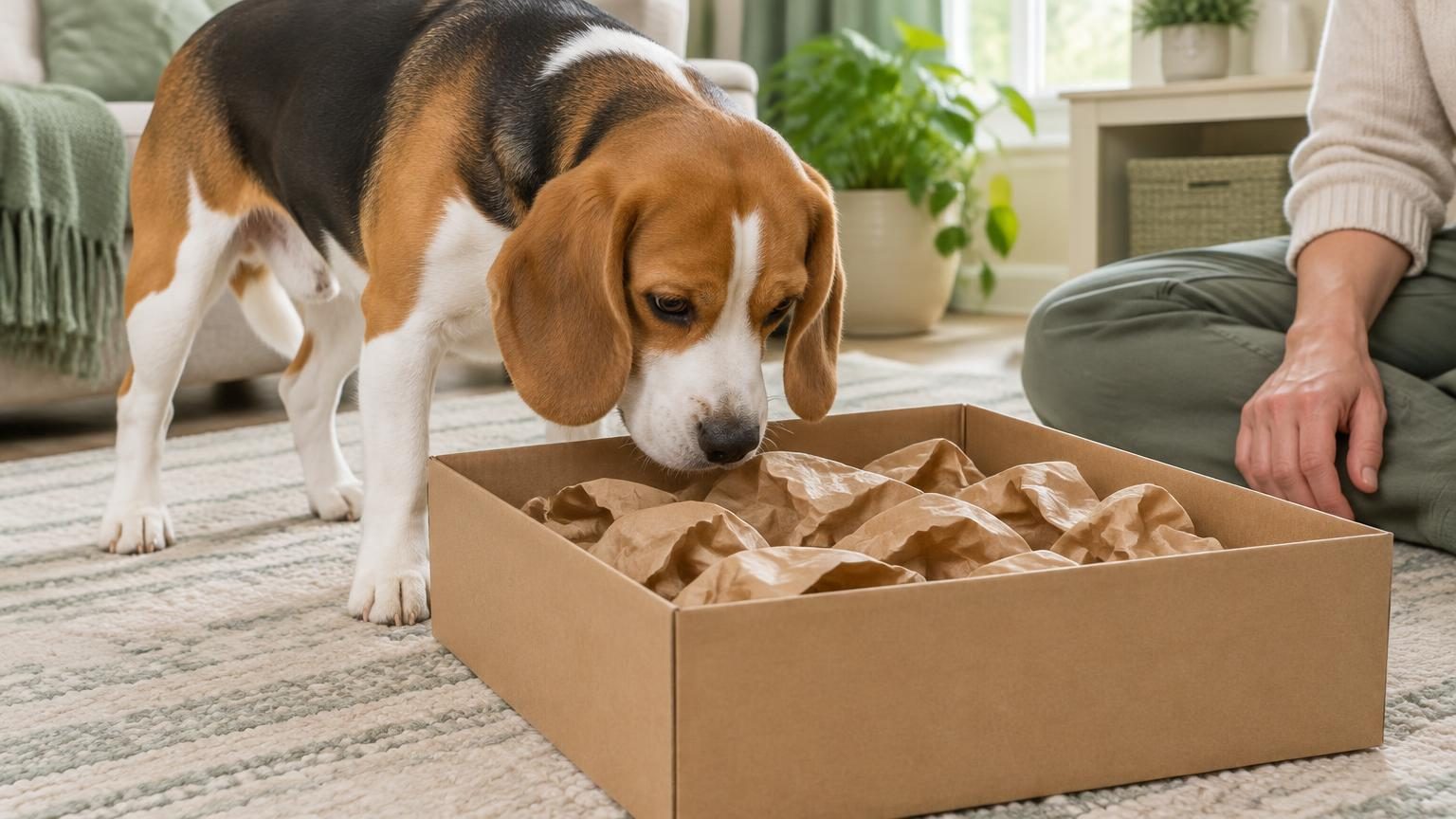
How to Keep Your Beagle Mentally Stimulated
Simple scent games, achievable food puzzles and short training sessions for a curious Beagle—with time to relax between activities.