
Best Types of Harnesses for Beagles: A Fit and Safety Guide
Compare walking harness features and check fit on a nose-led Beagle, without brand rankings, testing claims or promises that equipment will stop pulling.
6 min read
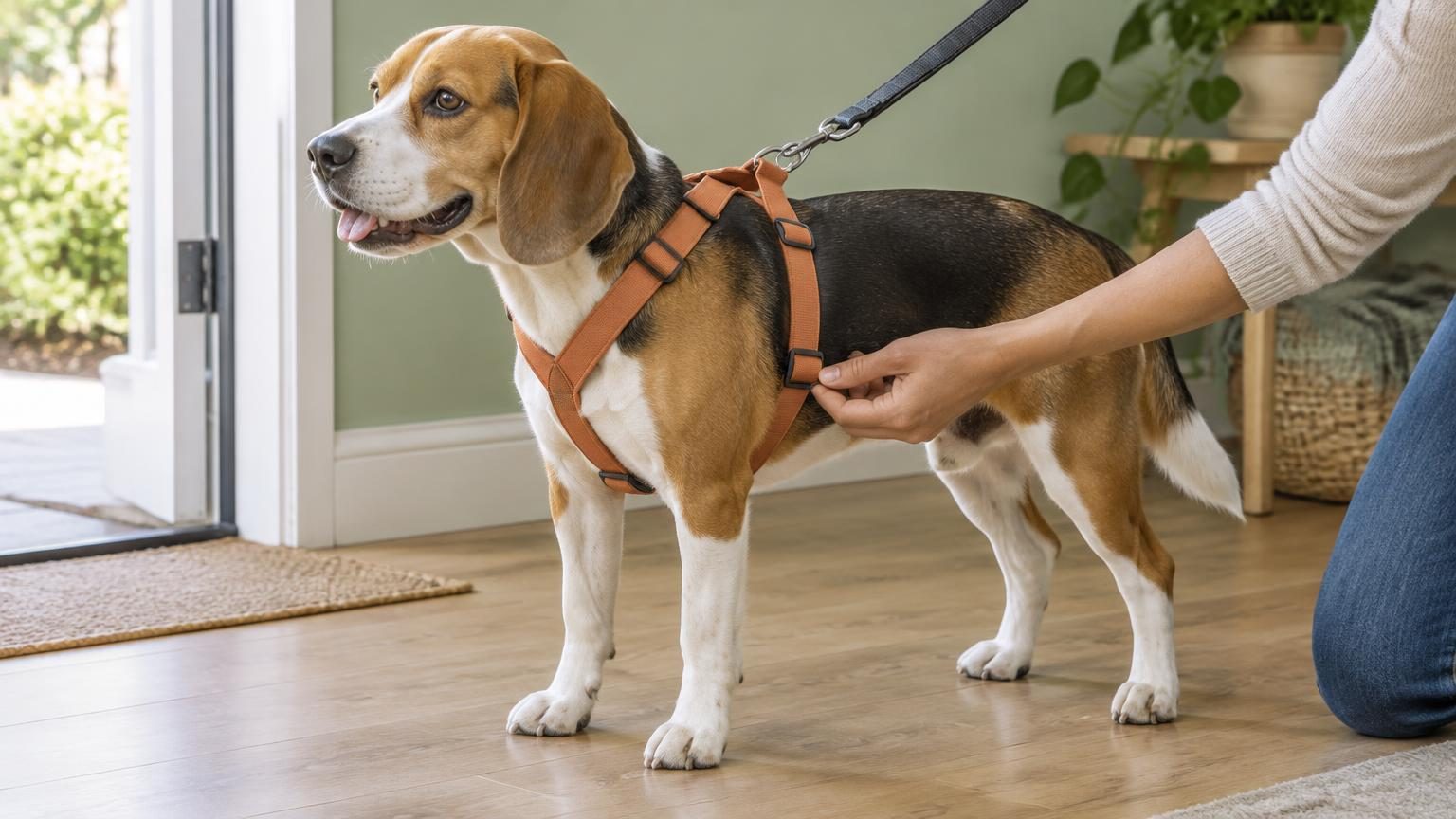
Choose for the dog, not the product label
The best harness for your Beagle is one that fits its body, suits your walking situation and remains comfortable in motion. A “Beagle size” or “no-pull” label cannot establish any of those things. Dogs of the same breed can have different chest shapes, proportions and responses to equipment.
This is a guide to features and practical checks, not a ranking of products. We have not conducted product testing and make no claims about particular brands, prices or partnerships. If you are buying for a puppy, our essential supplies checklist helps keep the purchase focused on useful basics.
Measure before selecting a size
Follow the manufacturer’s measurement instructions for that specific design. Use a flexible tape while your dog stands naturally, note the required chest and neck measurements, and compare them with the actual size chart. Weight alone is not a reliable sizing method.
Check whether the straps can adjust around your dog without reaching the limits of every buckle. For a growing puppy, remeasure as needed rather than leaving the harness loose for future growth. Between sizes, seek fitting advice or choose a different design; do not assume larger is always safer. Keep packaging and understand the return policy before a trial.
Compare common walking harness features
Attachment points and strap layout affect how equipment behaves, but no single feature makes a harness suitable for every Beagle. Assess the complete fit and how the leash travels around your dog. Use the table as a shopping checklist, not evidence that one style outperforms another.
| Feature | Potential use | What to check |
|---|---|---|
| Back leash attachment | Ordinary walks and managed exploration | Secure ring, comfortable straps and room to move; it does not teach loose-leash walking. |
| Front leash attachment | May help a handler manage direction | Leash stays clear of legs; no twisting, rubbing or jerking. |
| Two attachment points | Offers handler options | Use as instructed; extra hardware is not automatically better. |
| Y-shaped chest straps | A layout to try when checking front-body fit | Placement on your individual dog and freedom of shoulder movement. |
| Extra body strap | Another design option for dogs needing fitting advice | Correct position and comfort; not an escape-proof guarantee. |
Check fit while standing and moving
Fit the harness in a quiet, enclosed space. Follow the maker’s directions for strap placement and snugness. A common finger check can be a useful starting prompt, but hand size and harness design vary: it cannot replace checking whether the harness rotates, rubs or restricts movement.
Look from the front and side. Straps should not press into the throat, cut behind the front legs or interfere with the dog’s normal stride. Walk a few steps and reward calmly, then recheck. Watch for bunching, sliding or altered movement. If fit is unclear, ask a knowledgeable fitter or your veterinary team rather than relying on an online breed photo.
Introduce the harness without wrestling
Let your Beagle investigate the equipment and reward comfortable interest. If it must pass over the head, teach the dog to approach the opening voluntarily in small steps. A design with a neck buckle may be easier for some dogs, but it still needs a comfortable introduction.
Briefly fasten it, reward, unfasten and finish before the dog struggles. Gradually practise moving around indoors, then add a leash in a safe place. VCA advises gradual, gentle equipment introduction and supervision. Our puppy training guide explains reward-based learning that works for adults as well as puppies.
A harness does not replace leash training
A Beagle may still pull toward an interesting scent in a well-fitted harness. Stop treating pulling as proof you need harsher equipment. Reward attention and comfortable leash slack, work in easier settings, and allow safe sniffing opportunities so the walk is not continuous conflict.
A front attachment may help some handlers manage direction, but it is not a cure and must not be used to jerk a dog sideways. VCA cautions against equipment designed to cause discomfort and notes that leash jerking is not necessary for well-mannered behavior. For a suitable mix of walking, play and rest, see our exercise guide.
Do a practical pre-walk security check
Inspect buckles, stitching, rings and leash clips before leaving. Confirm every intended fastening is closed and the leash is attached to the correct point. Trial new equipment inside a secure area, not beside traffic or an open front door. Keep the environment calm enough to notice whether the dog is comfortable.
No harness is guaranteed escape-proof. A dog who backs away can move differently from one walking forward; seek individual fitting help if your Beagle has slipped equipment. Do not deliberately frighten or yank the dog to test security. If an appropriate backup attachment is recommended, learn how to use it safely without tangles or constant neck pressure.
Long lines and different uses need separate checks
For controlled exploration with a long line, choose a suitable open area and a comfortable, secure harness. Manage slack, prevent entanglement and avoid letting the dog accelerate into the line’s end. A long line is not permission to ignore roads, livestock, wildlife or other walkers.
A walking harness is not automatically a car restraint, lifting aid or sports harness. Claims about those uses require separate suitability information and evidence, not the presence of a handle or strong-looking buckle. Keep this purchase focused on its intended job. Our mental enrichment guide offers lower-key alternatives when exploration conditions are unsuitable.
Remove equipment and look for contact problems
Supervise while your dog wears walking equipment and remove it when it is not needed, particularly before unsupervised rest or confinement where straps could snag. Follow product care instructions and let wet gear dry appropriately. Check contact points for debris, rubbing and tender skin.
Recheck fit after growth or body-shape changes and when straps have been adjusted or washed. If your dog suddenly resists wearing familiar equipment, inspect it and consider discomfort. The grooming guide includes gentle coat and skin checks; persistent soreness needs veterinary advice.
A short purchase checklist
Before buying, decide what the harness is for, measure your dog and identify which adjustments matter. Prefer clear fitting instructions and a realistic opportunity to assess the fit. Avoid paying for claims that do not answer a practical need.
- Correct size chart and adjustable range for your individual dog.
- Comfortable strap placement and normal movement in a supervised trial.
- Secure, inspectable buckles and an appropriate leash attachment.
- No unverified guarantees about preventing escape, pulling or injury.
- A plan for gradual introduction, cleaning and regular fit checks.
Frequently Asked Questions
Will a no-pull harness stop my Beagle pulling?
Not on its own. Equipment may help handling, but comfortable fit and reward-based leash practice are still needed. Avoid jerking or equipment designed to cause discomfort.
Is a front clip always better than a back clip?
No. Suitability depends on the complete design, your dog and the walk. Check that the leash stays clear of legs and that handling does not twist or rub the dog.
Can my Beagle wear a harness all day?
Walking equipment is not automatically suitable for continuous wear. Supervise its use, follow instructions and remove it when unnecessary or when snagging could occur.
Can I use the walking harness in a car?
Do not assume so. A walking design and a vehicle restraint have different purposes. Seek appropriate, substantiated suitability information for vehicle travel separately.
References
Related Articles

How to Train a Beagle Puppy: Step-by-Step
A calm, reward-based plan for name recognition, recall, basic cues, potty routines, leash manners and socialization — with a sample daily schedule built around a Beagle's nose.
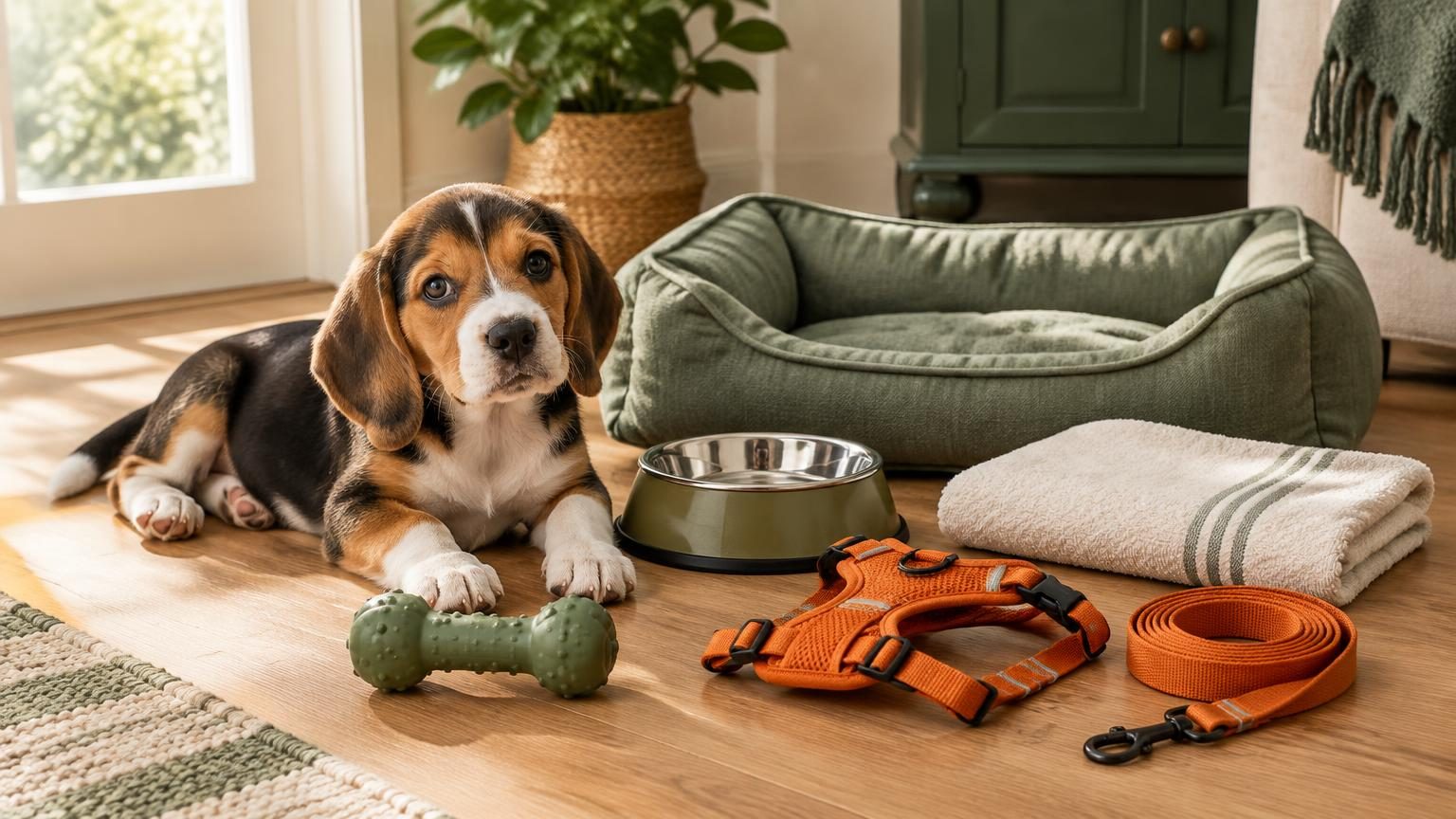
Essential Supplies for a New Beagle Puppy
A practical first-week checklist: secure your home, choose comfortable basics and spend on what your nose-led puppy actually needs.
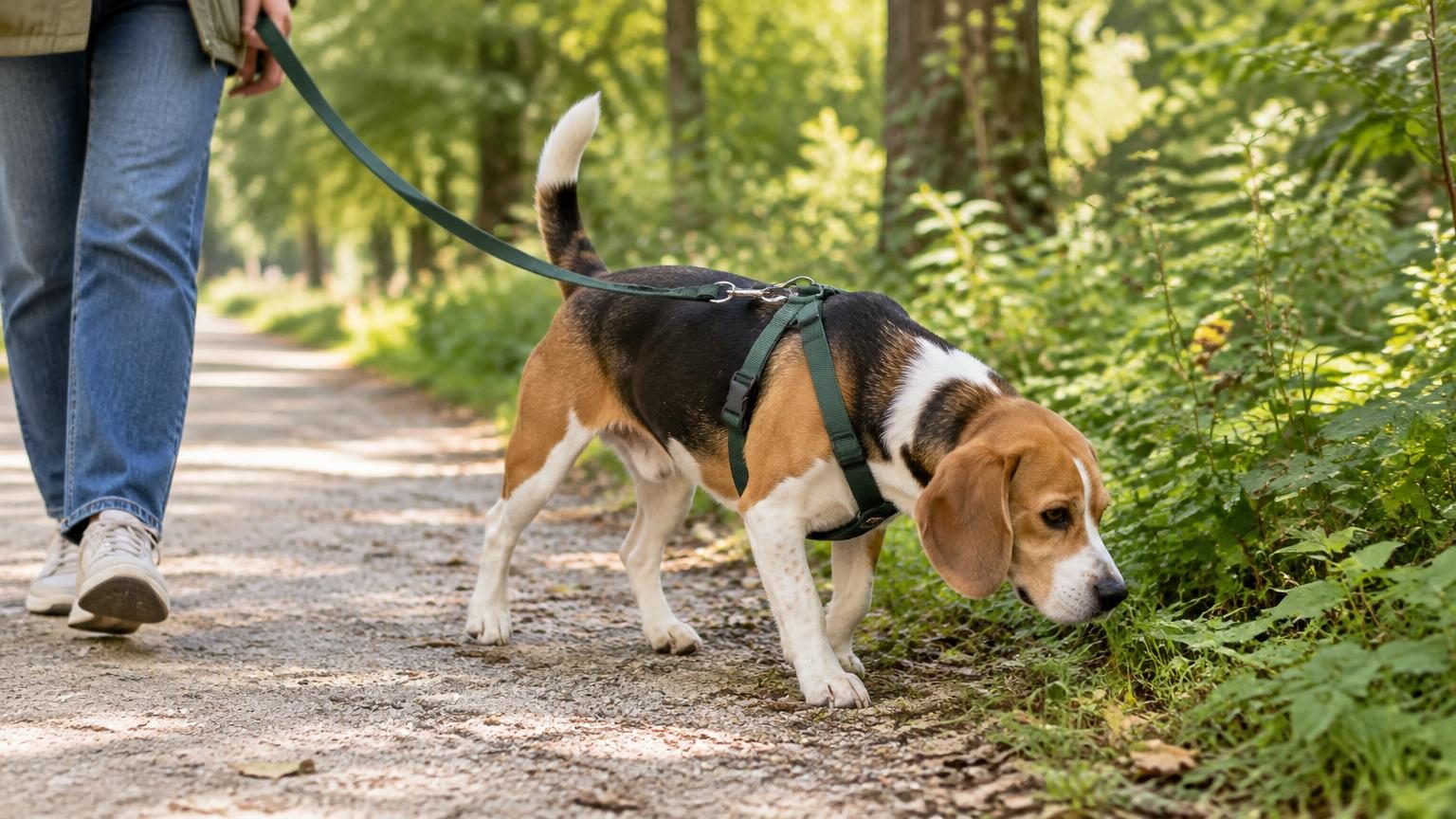
How Much Exercise Does a Beagle Need? A Practical Activity Guide
Plan walks, sniffing, play and rest around your Beagle’s age, health and response, rather than chasing a universal daily exercise target.