
Essential Supplies for a New Beagle Puppy
A practical first-week checklist: secure your home, choose comfortable basics and spend on what your nose-led puppy actually needs.
6 min read
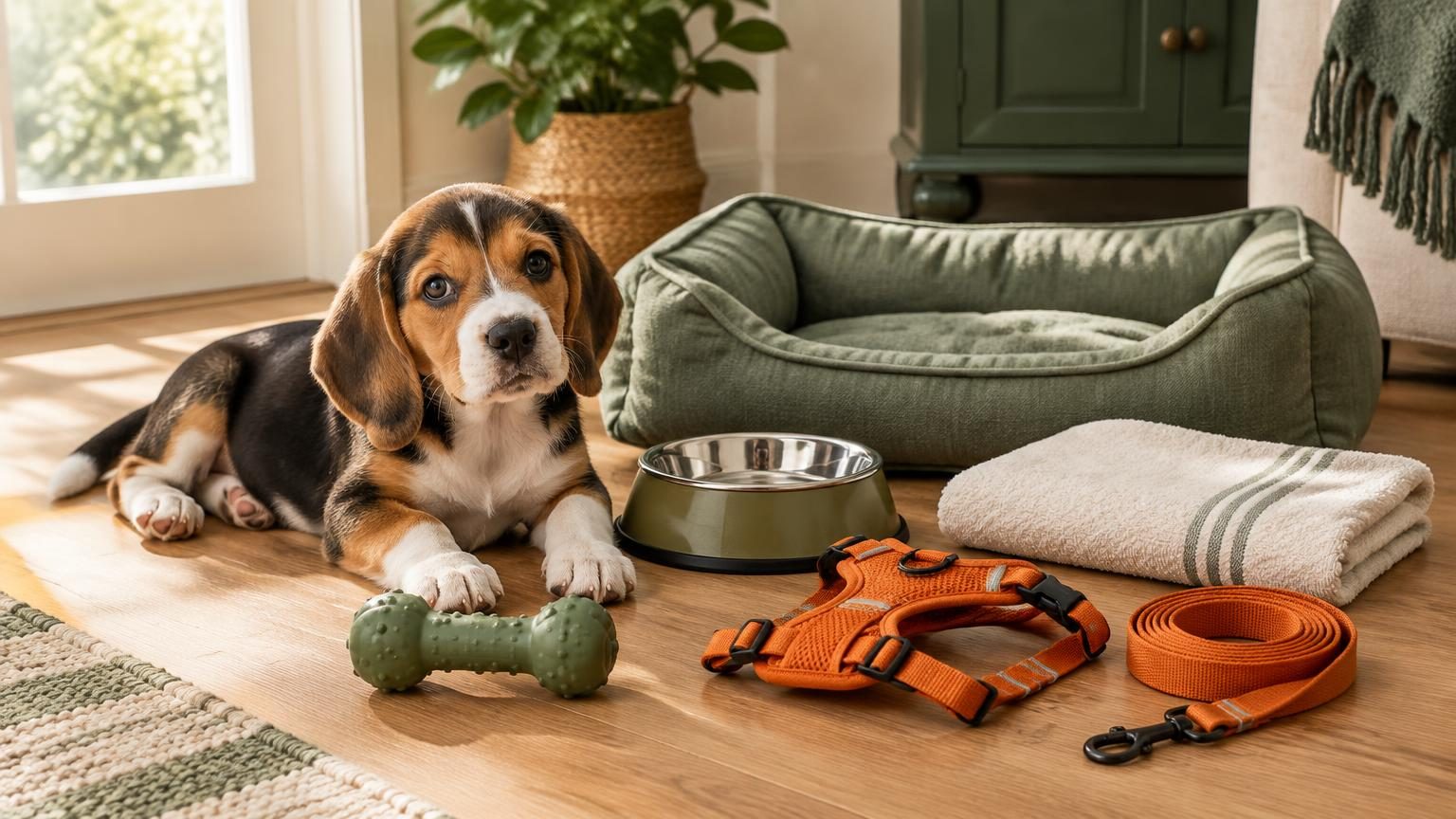
Start with a safe setup, not a full shopping cart
A Beagle puppy needs somewhere to sleep, easy access to water, suitable food, safe outings and a person who can supervise. An elaborate collection of gadgets cannot replace those basics. Choose a few washable, adjustable items, then add more as you discover whether your puppy prefers carrying toys, sniffing for food or resting near you.
Beagles are scent hounds: a dropped food wrapper or a gap under a gate may be more interesting than the bed you bought. Spend time checking the environment before choosing accessories. Our complete Beagle care guide puts the shopping list into a daily-care routine.
Your day-one supplies checklist
Have these ready before collection day. You do not need a specific brand, colour or premium label; look for appropriate size, a practical cleaning method and clear instructions.
- Current complete puppy food, plus the breeder or rescue’s written feeding information.
- Stable food and water bowls, a measuring method and a secure food container.
- A washable bed and a quiet puppy pen or suitable crate if you plan to use one.
- An adjustable harness, a plain leash and a collar with identification appropriate to local requirements.
- A secure vehicle travel arrangement ready for the journey home.
- A few puppy-appropriate toys, waste bags and a pet-safe accident cleaner.
- A brush, spare washable bedding and contact details for your veterinary practice.
Food and bowls: keep the first days familiar
Ask what your puppy currently eats, how meals are measured and when they were last fed. Sudden changes are not necessary simply because you have found a different food. Discuss any change with your vet and use the Beagle puppy feeding guide as preparation for that conversation, not as a personalised ration.
Choose bowls that stay upright when a curious paw nudges them. Put water where your puppy can reach it without crossing a frightening surface or crowding another animal. Wash bowls regularly and store food where the puppy cannot open or chew the container. Keep a portion of the measured food available for training; adding endless treats because a Beagle looks hungry makes it difficult to track intake.
A bed, pen and resting area that work together
Place the bed somewhere quiet but not isolated from family life. A washable cover and a spare blanket are often more useful than thick decorative padding. Check seams and filling frequently, especially if the puppy chews bedding. Remove damaged bedding rather than waiting for stuffing to disappear.
A pen can create a manageable puppy area; a crate can be introduced as a comfortable resting place. Choose enough space for the puppy to stand, turn and lie naturally. Introduce it with the door open and positive experiences. Never use confinement as punishment or expect a crate to replace company, toileting and exercise. Remove snag hazards and follow the enclosure’s safety instructions.
Harness, collar and leash: fit before the first outing
Do not buy by breed name alone. Measure your puppy according to the manufacturer’s instructions, check the adjustment range and allow for growth without leaving a loose fit today. A harness should not rub the armpits, restrict normal movement or slide over the head when the puppy backs away.
Practise wearing equipment indoors for brief, rewarded moments. Check the fit before outings and again as your puppy grows. A collar with identification is not a guarantee against escape, and a harness does not teach leash manners. Our harness buying guide and puppy training guide cover the separate tasks of choosing equipment and building skills.
Secure travel belongs on the first-day list
You need a safe travel arrangement before bringing the puppy home, not a few weeks later. Do not let a puppy roam around the vehicle or sit loose on the driver’s lap. Choose a suitable, securely installed crate or dog restraint, check the instructions and ask about independent crash-testing evidence if collision protection is claimed. An ordinary walking harness is not automatically a car safety device.
Plan a quiet arrival and have someone available to help when possible. Carry cleaning supplies and water for the journey. Never leave the puppy unattended in a vehicle; temperature and ventilation risks are not solved by opening a window.
Choose a small, supervised toy collection
Begin with a flexible puppy-appropriate chew, a simple interactive toy and perhaps a food toy that is easy to clean. The toy must be large enough not to swallow and should have no easily detached pieces. Watch the first sessions and remove anything the puppy can rapidly shred.
Check manufacturer age and size guidance, but treat it as a starting point rather than a promise. A toy that suited another Beagle may not suit yours. Our chew toy guide explains inspection and material choices; our puzzle toy guide helps you start at an achievable difficulty. Toys do not make it safe to leave an unfamiliar chewer unsupervised.
Cleaning, grooming and puppy-proofing
Keep waste bags at the exit and use an accident cleaner according to its label, testing surfaces first and keeping the puppy away until the area is ready to use. Avoid scolding after accidents. Put supervision and a practical toilet routine ahead of extra cleaning gadgets; see potty training a Beagle puppy.
Choose a gentle brush and make handling brief and rewarding. Ask a vet or groomer to demonstrate nail and ear care rather than buying products to treat a problem you have not identified. A brush is a normal care tool; medicated products are not general shopping-list essentials.
- Check gates, fencing, door gaps and spaces behind furniture at puppy height.
- Move medicines, cleaners, food waste, cords and small swallowable items out of reach.
- Secure bins and food cupboards; do not rely on a lid a Beagle can nose open.
- Arrange barriers so everyone can close them reliably, including visitors.
What can wait, and what cannot
Multiple beds, complicated puzzles, matching outfits and a large toy subscription can wait. Observe what gets used before buying more. A towel and a washable bed are enough to learn your puppy’s preferences.
Vet registration, identification planning, safe travel and a supervision schedule should not wait. Ask your vet about vaccination status and local disease risk before using shared dog areas. Arrange positive, low-risk introductions rather than assuming the puppy either needs complete isolation or can safely visit every park. Divide family responsibilities before arrival: who handles meals, toilet trips, rest and overnight care?
A simple first-evening example
Bring your puppy to the planned toileting place, then offer a calm introduction to the resting area and water. Use familiar food at the appropriate mealtime. Keep visitors and excitement modest, watch for tiredness and offer another toilet opportunity before sleep.
Keep the first purchases together in one accessible place: leash by the exit, cleaner in a closed cupboard, food scoop beside the sealed container. A prepared home feels predictable to a puppy and makes it easier for you to notice what is missing without panic-buying.
Frequently Asked Questions
Do I need both a crate and a pen?
No. Choose a safe arrangement that fits your home and supervision plan. A crate is optional, must be introduced positively and cannot compensate for long absences or missed toilet trips.
Should I buy adult-sized equipment to save money?
Only if it genuinely fits now. Loose harnesses and oversized collars can create escape or snag risks. Check fit and adjustment range rather than relying on an adult-size label.
Is the most expensive toy the safest?
No price guarantees safety. Material, size, construction, condition and your puppy’s chewing behaviour matter; supervision remains necessary.
References
Related Articles

The Complete Beagle Care Guide for Beginners
What daily life with a Beagle really involves — temperament, exercise, feeding, grooming, training, home safety and vet care — plus the mistakes new owners make most often.
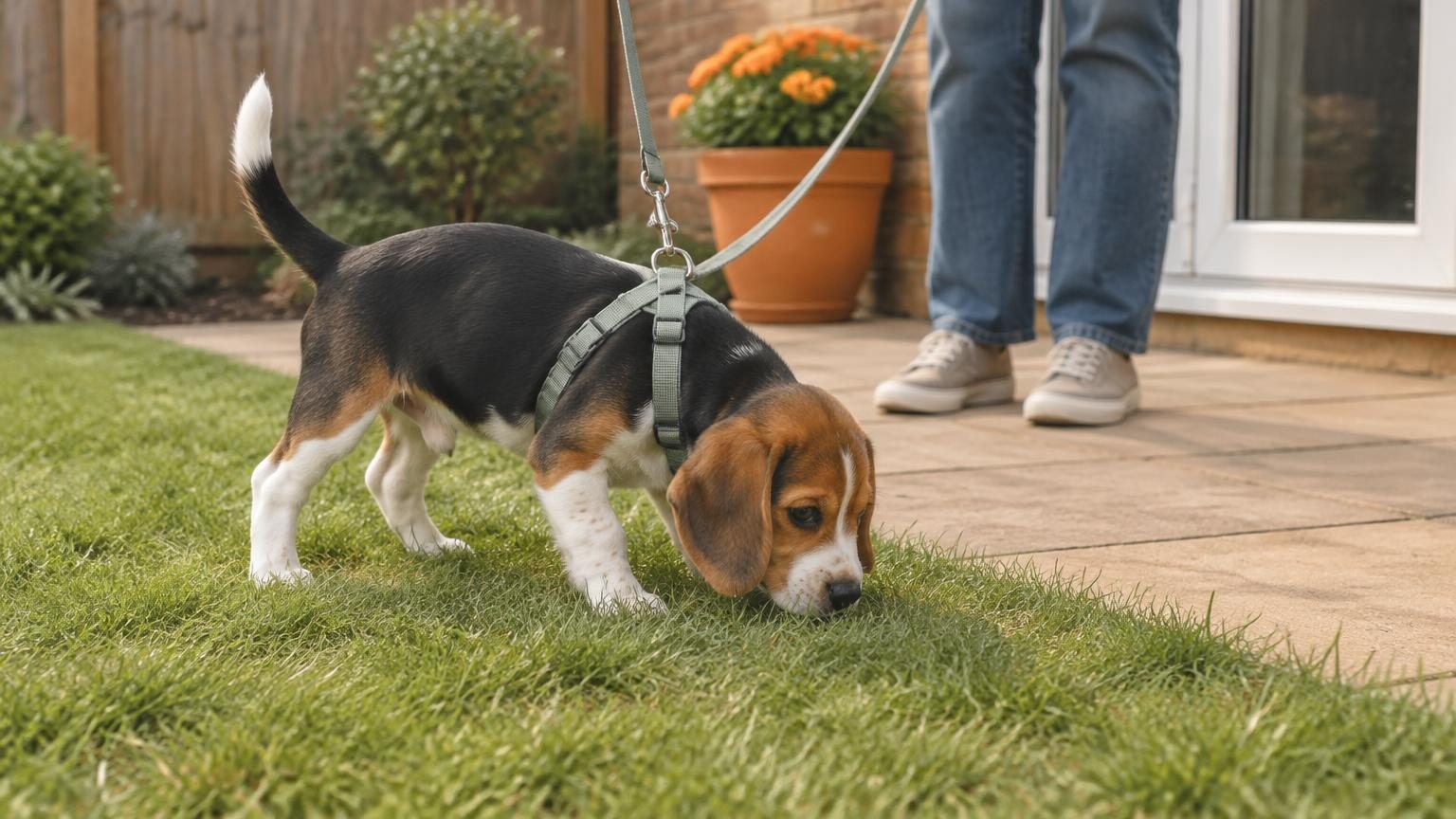
How to Potty Train a Beagle Puppy: A Practical Routine
Build reliable toilet habits with well-timed outings, immediate rewards and a routine that adapts to your individual Beagle puppy.
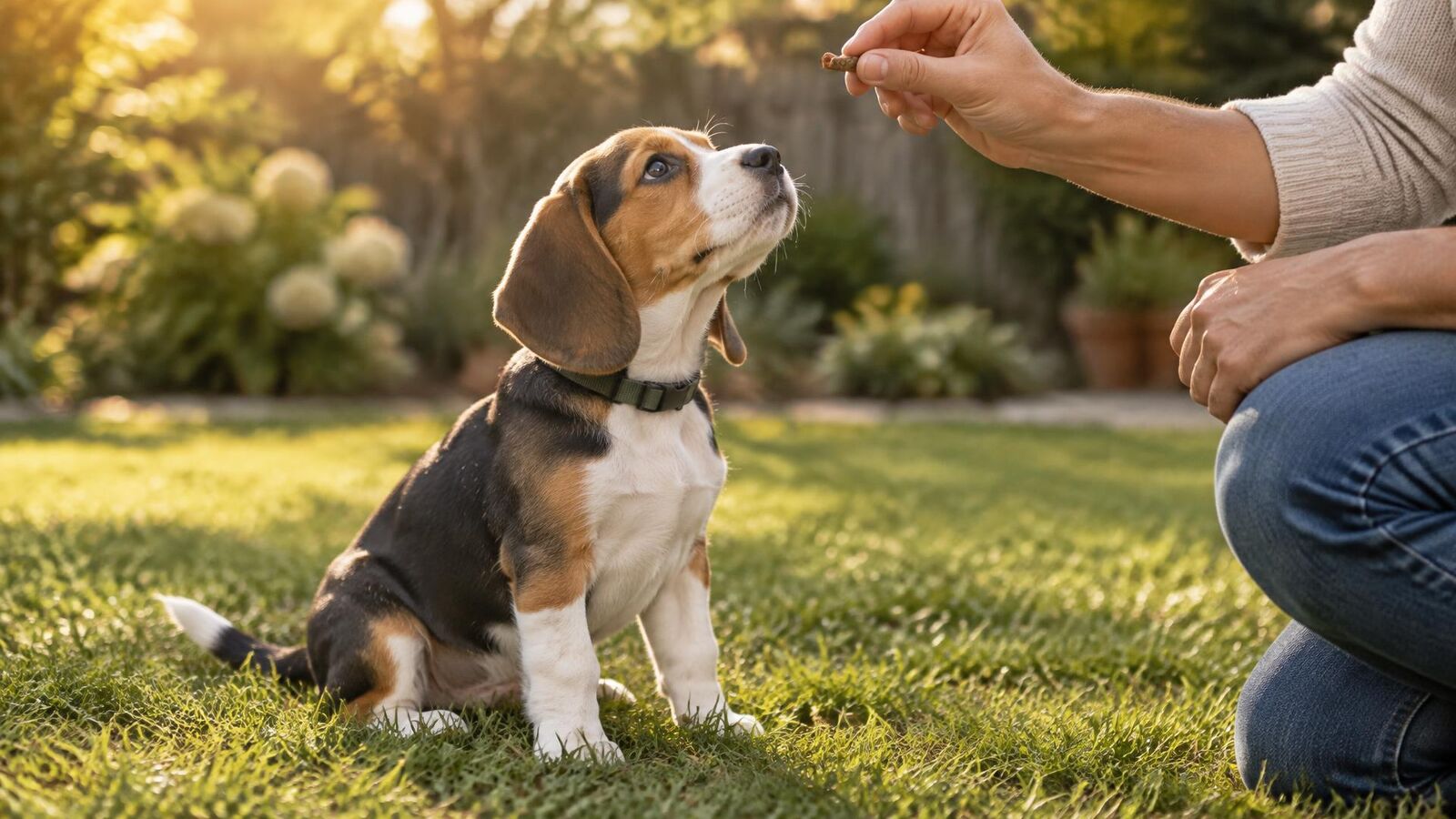
How to Train a Beagle Puppy: Step-by-Step
A calm, reward-based plan for name recognition, recall, basic cues, potty routines, leash manners and socialization — with a sample daily schedule built around a Beagle's nose.