
Beagle Puppy Feeding Guide: Meals, Portions and Healthy Growth
Choose a complete growth diet, measure meals and build a practical feeding routine for a food-curious Beagle puppy, with veterinary guidance for individual needs.
6 min read
Veterinary review has not been verified. This article is educational only and not a substitute for professional veterinary advice.
Start with steady growth, not the biggest appetite
A Beagle puppy can make every meal seem like an emergency. Eagerness to eat is not a reliable way to decide the portion, and an empty bowl does not mean the puppy needs unlimited refills. The aim is appropriate, steady growth supported by a complete diet, comfortable meals and monitoring of the individual dog.
VCA’s guidance on feeding growing puppies emphasizes steady rather than maximal growth and regular checks of weight and body condition. This article offers household planning, not a calorie prescription. Your veterinary team should tailor advice to your puppy’s age, condition, health and food. The complete care guide puts feeding alongside rest, training and safe exploration.
Choose food intended for growth
Look for a complete and balanced food appropriate for puppy growth, using the nutritional adequacy information on the packaging rather than a picture of a Beagle. Label terminology differs between markets; ask your vet if you are unsure whether a product is a complete everyday diet or a complementary food.
The Merck Veterinary Manual recommends appropriate growth nutrition until skeletal maturity. That does not provide a universal transition date for every puppy. Ask when your dog should change to adult food and which products suit it. Marketing terms, price and a long ingredient list alone cannot tell you whether a diet meets its needs. Do not add vitamins, calcium or other supplements to a complete diet without veterinary guidance.
Get a portion starting point, then review it
Use the product’s feeding instructions with your vet’s advice as a starting point, not a permanent promise. Confirm whether the label refers to current weight, expected adult weight or another measure. Check the energy information and whether amounts are stated per day or per meal; confusing these can substantially change intake.
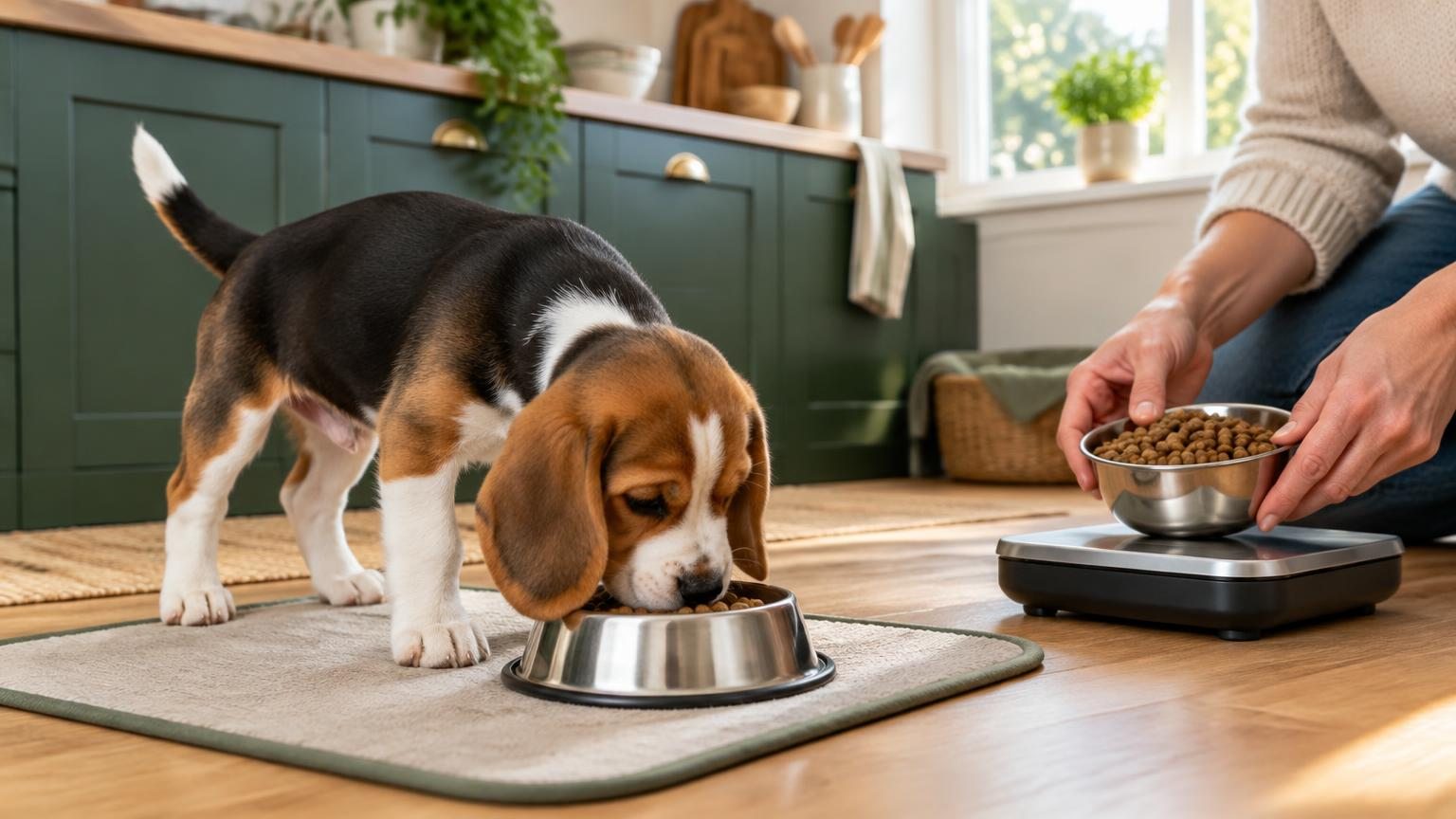
Food density varies, so a cup of one food is not interchangeable with a cup of another. A kitchen scale makes portions easier to repeat. Record the daily amount and how it is divided. If the puppy’s appetite, stools or weight pattern changes, review the plan rather than making large adjustments because it begs. Do not restrict a growing puppy to an adult weight-loss routine.
Build a meal routine your household can follow
Young puppies generally need their food divided into more than one meal, but the appropriate frequency depends on age and individual needs. Agree a schedule with your veterinary team and fit it around waking, supervised activity and toilet opportunities. A predictable routine helps everyone know what has already been fed.
For example, write the planned meal times on a household sheet and tick each serving after feeding. If two people share care, one can prepare the daily allocation while the other uses only that allocation for meals and rewards. This prevents an enthusiastic puppy receiving a second breakfast. Our potty training guide explains why opportunities after eating belong in the day’s routine.
Include training rewards in the plan
Beagles often work eagerly for food, making short lessons convenient around meals. Put aside some of the measured food for easy training when it is suitable and appealing to your puppy. Count additional treats and chews when discussing the full diet with your vet; extras are food, not an invisible allowance.
Keep rewards small enough for your puppy and the task, and avoid making every repetition a large snack. Suitable praise, play and safe sniffing opportunities can also be rewarding, depending on the dog. Our puppy training guide shows how to build useful skills without escalating the quantity of treats. Never withhold needed meals to make a puppy cooperate.
Make meals calm and equipment appropriate
Offer a quiet space, clean bowls and fresh water. Let the puppy eat without children or other pets crowding it. Prevent conflict by feeding pets separately when needed; do not repeatedly take the bowl away to test whether the puppy will tolerate it. Growling or guarding needs safe management and qualified help, not confrontation.
A suitable slow feeder or easy food activity may change the pace for some puppies, but it is not a treatment for digestive illness. Introduce it under supervision, ensure the puppy can succeed and inspect it for damage. Start with familiar measured food rather than a complicated new recipe. Our puzzle toy guide covers difficulty and supervision.
Change foods thoughtfully
Keep a record of the food your puppy arrives on, its usual portions and any problems already observed. Discuss changes with your vet and follow a suitable gradual transition plan where appropriate. Changing several foods, treats and supplements together makes it harder to understand a reaction.
If vomiting, diarrhea, marked lethargy or poor appetite occurs, seek veterinary advice rather than repeatedly trying new brands. Puppies can become unwell quickly. Ask how urgently the puppy should be seen and describe when signs started, what it ate and whether water is being kept down. Do not give human medicines or attempt a home diagnosis.
Track growth with more than a number
Arrange regular weigh-ins and ask your vet to demonstrate body-condition assessment for your puppy. Coat and posture can make visual guessing misleading. A growth record is most useful when interpreted alongside the puppy’s development, health and actual food intake rather than compared with another Beagle online.
Note the product name, measured daily amount, extras, appetite, stools and dates of weigh-ins. Bring the record to appointments. A sudden change in weight or appetite is a reason to ask for assessment, not proof of a particular disease. Our health concerns guide explains the limits of owner observation.
Prevent scavenging and unsafe extras
Keep food bags, rubbish and leftovers secured. A nose-led puppy may investigate bags or counters before you expect it to. Supervise kitchen access and teach useful habits without relying on training to make an unsafe food item harmless. The supplies checklist includes practical household preparation.
Do not offer cooked bones or assume human snacks are safe for dogs. If you suspect your puppy swallowed something harmful, contact your vet or an animal poison service promptly with the packaging and estimated amount if available. Do not induce vomiting unless a professional specifically directs you. Prevention is easier than managing a food emergency.
Questions to take to the next appointment
Bring the food label or a clear photo of it, your measured feeding record and concerns about appetite or growth. A useful plan is one the whole household understands and can review as the puppy develops. This guide has not been individually reviewed by your puppy’s veterinarian and cannot replace that advice.
- Is this a complete growth diet appropriate for my puppy?
- What daily allocation and meal pattern should we start with?
- How should we include training rewards and other extras?
- When should we recheck growth and discuss adult food?
Frequently Asked Questions
How many grams should I feed a Beagle puppy?
There is no single amount for the breed. Food energy, age, growth and body condition matter. Use the specific label and your vet’s guidance, then monitor and review.
Why does my puppy still beg after a meal?
Food interest does not establish nutritional need. Check the planned intake and growth with your vet rather than automatically refilling the bowl.
When should I switch to adult food?
Discuss maturity and individual needs with your vet. Do not use a universal birthday or switch early to control growth without advice.
Can I use kibble for training?
If suitable for your puppy and the task, set aside part of the measured daily allocation. Discuss how additional treats fit the diet and keep rewards manageable.
References
Related Articles
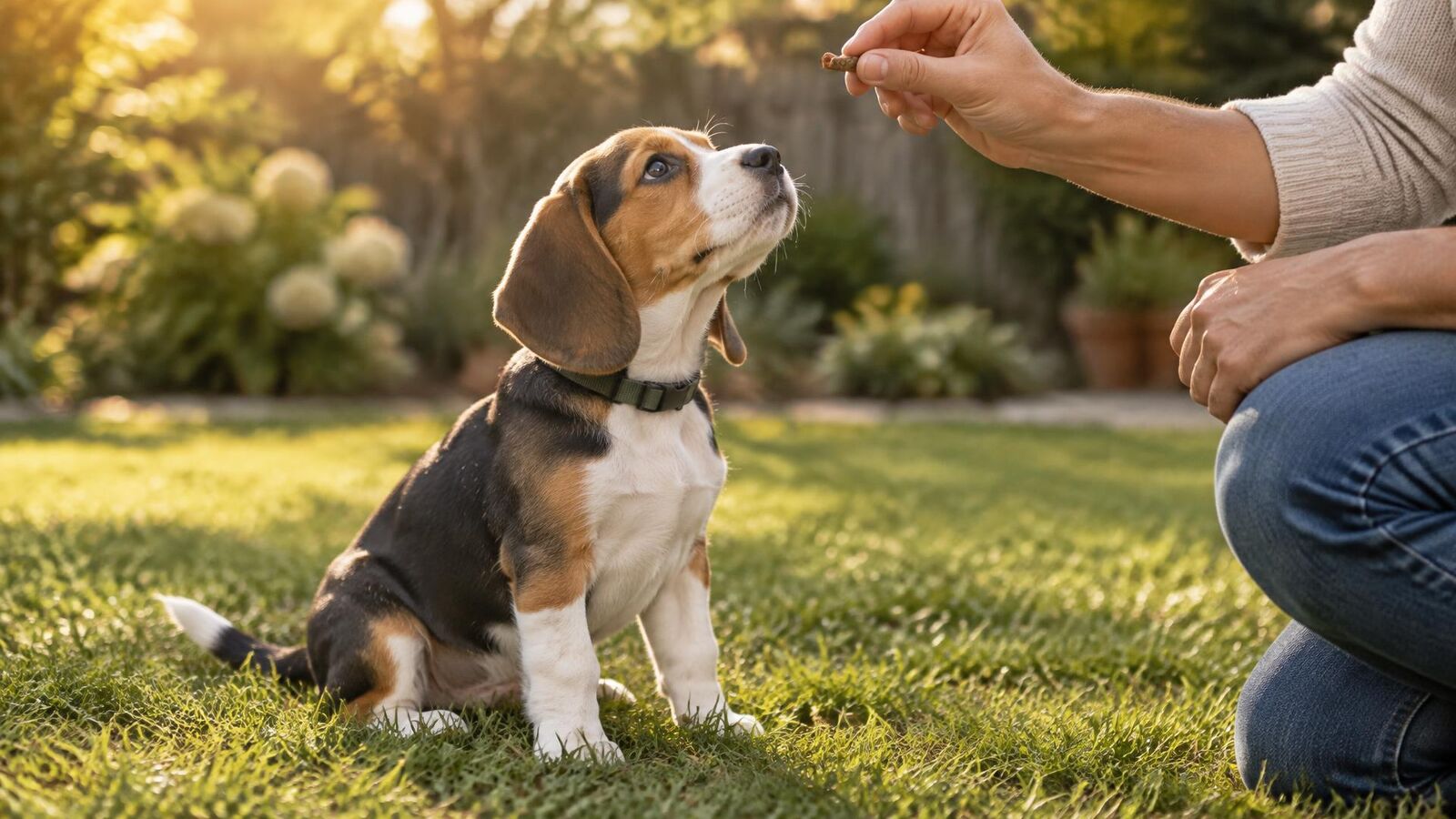
How to Train a Beagle Puppy: Step-by-Step
A calm, reward-based plan for name recognition, recall, basic cues, potty routines, leash manners and socialization — with a sample daily schedule built around a Beagle's nose.
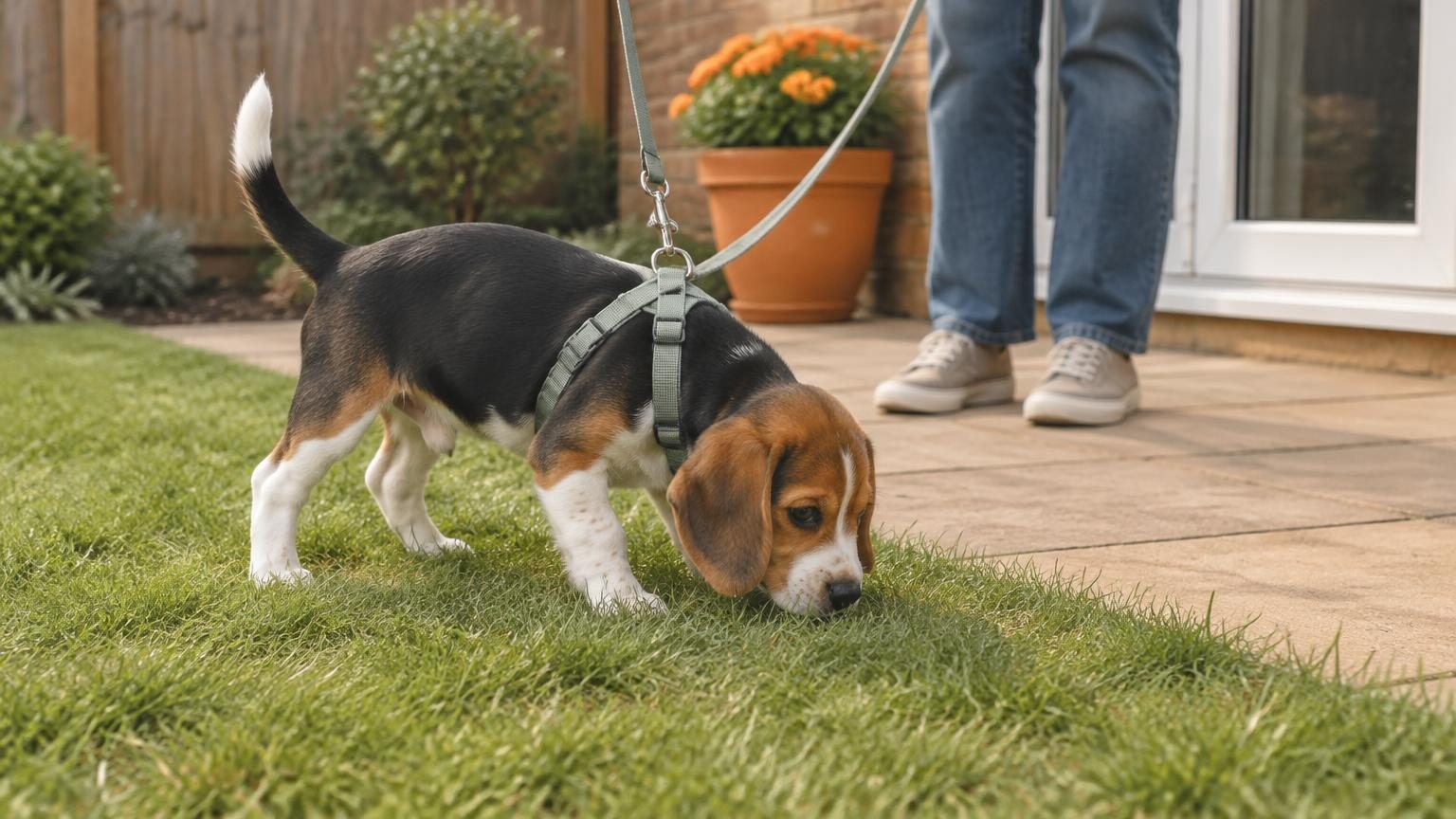
How to Potty Train a Beagle Puppy: A Practical Routine
Build reliable toilet habits with well-timed outings, immediate rewards and a routine that adapts to your individual Beagle puppy.
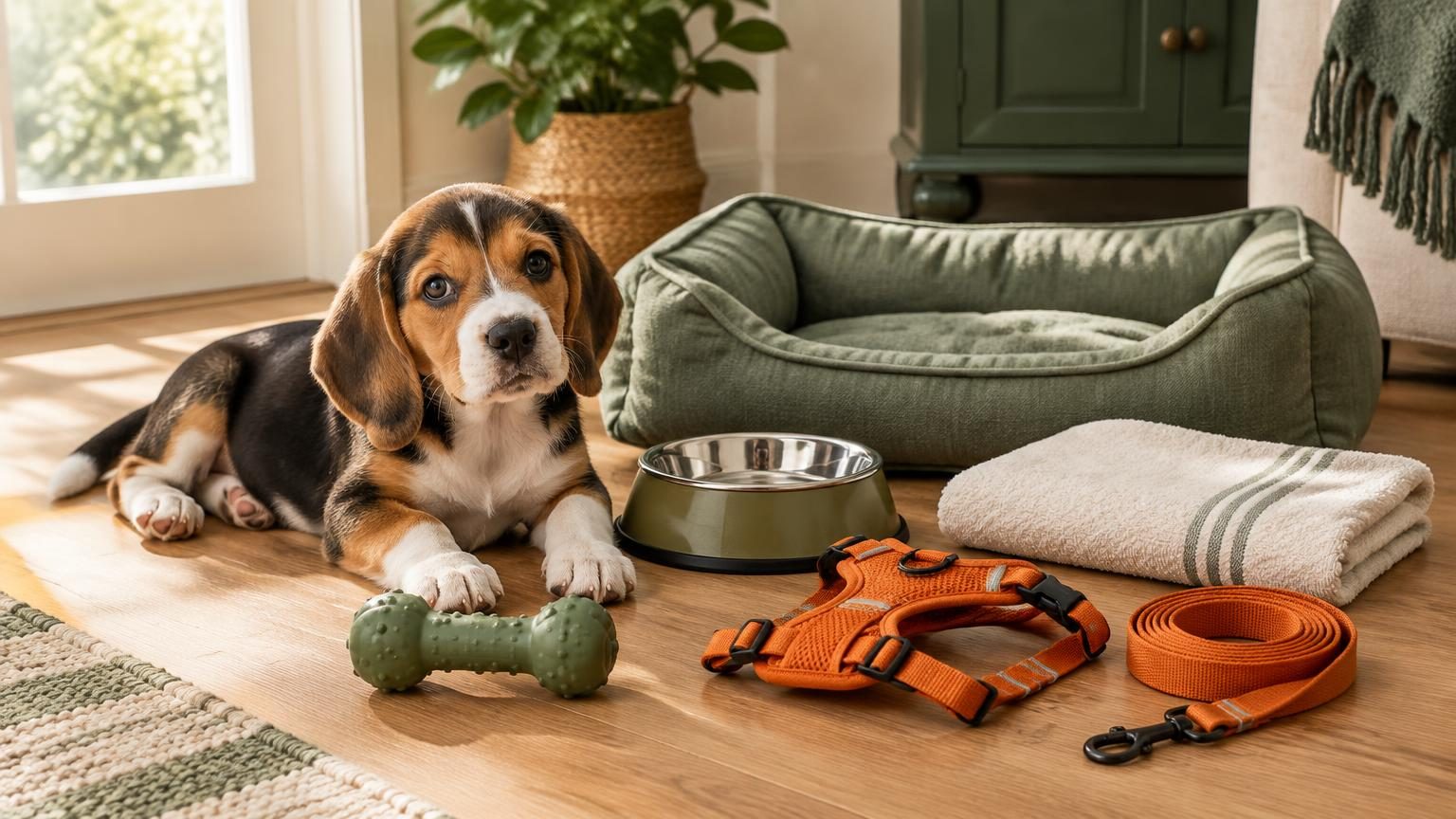
Essential Supplies for a New Beagle Puppy
A practical first-week checklist: secure your home, choose comfortable basics and spend on what your nose-led puppy actually needs.