
How to Stop a Beagle From Barking Excessively: A Humane Plan
Identify what triggers your Beagle’s barking, reduce avoidable rehearsals and teach calmer alternatives without punishment or promises of a silent dog.
6 min read
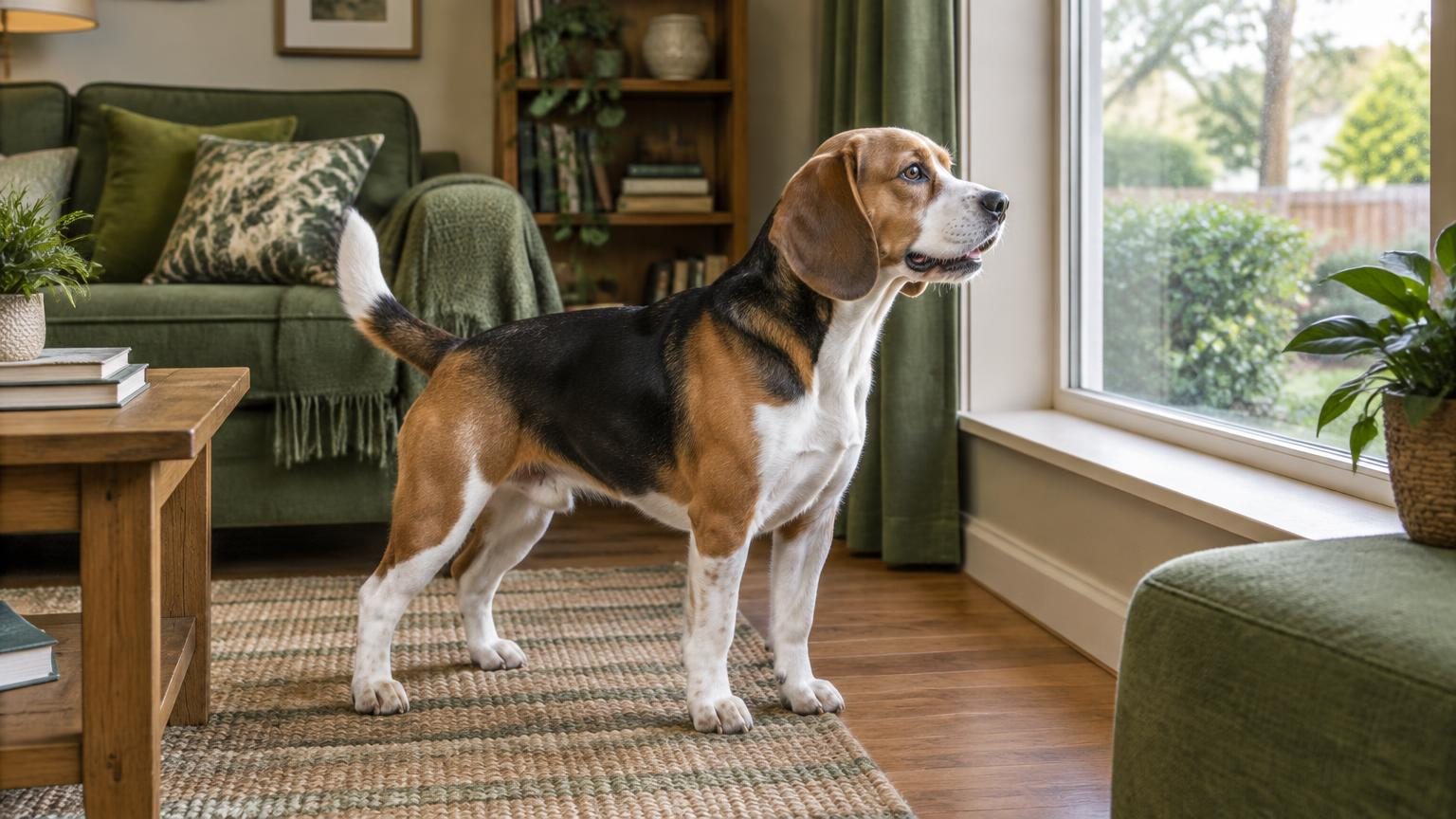
Aim for manageable communication, not complete silence
Beagles are vocal scent hounds. Barking can alert, request something or accompany excitement; it is not automatically disobedience. The practical goal is to understand repeated barking that disrupts daily life and help the dog cope or communicate differently, not erase every sound.
The American Kennel Club describes the Beagle’s distinct bark, bay and howl in the context of its hunting history. That explains a breed tendency, not the cause of every episode. Cornell’s excessive-barking guidance emphasizes identifying triggers and using suitable management and training. Sudden changes or signs of illness should be discussed with your vet before assuming this is only a training problem.
Keep a short trigger log
Record what happened just before barking, where the dog was, how long it continued and what people did next. Include outside sounds, moving people, other dogs, food preparation and departures. Watch for patterns across several ordinary days rather than concluding that one loud evening explains everything.
For example, “barked from the sofa when deliveries passed the window, then stopped when the view was blocked” is more useful than “barks all afternoon.” Do not intentionally provoke the dog to test a theory. If recording behavior when alone, use a safe manageable absence rather than leaving a distressed dog longer for evidence. Our separation-anxiety guide explains why noise alone is not a diagnosis.
Change the setting before increasing training demands
If a street-facing window repeatedly triggers barking, try moving the resting spot away from it or using an appropriate visual barrier. Keep ventilation, light and household safety in mind. For predictable arrivals, arrange a quieter area before the visitor reaches the door instead of trying to shout over the reaction.
Management reduces opportunities to repeat the same intense response; it is not proof that the underlying emotion has been resolved. Offer a comfortable alternative resting location, not isolation as punishment. Never leave a dog in unsafe confinement to suppress noise. A Beagle who still appears worried needs an easier setup and possibly professional assessment.
Meet ordinary needs without trying to exhaust the dog
Review toilet opportunities, company, comfortable rest, appropriate movement and manageable enrichment. An under-stimulated dog may benefit from a better daily routine, but not every barking problem is boredom. A tired dog can still be fearful, uncomfortable or overexcited.
Use safe sniffing, short learning sessions and easy supervised activities rather than continuous high-energy play. Our mental stimulation guide offers practical options, while the exercise guide stresses age, health and recovery. Rest is part of the plan. Do not prescribe longer walks as a cure for barking during departures.
Teach an alternative when the room is quiet
Choose an easy behavior such as looking toward you or stepping onto a mat away from the window. Practise before the trigger appears. Reward the behavior in a calm room, then gradually introduce mild, manageable distractions. An alternative that has never been learned is unlikely to work during a strong reaction.
For a mat exercise, place a comfortable mat nearby, reward voluntary approaches and build a few relaxed moments there. Avoid repeatedly luring the dog into a position it cannot maintain. The puppy training guide explains reward-based foundations that also apply to adults. Keep sessions brief and finish while the dog is succeeding.
Reward pauses without provoking barking
When a brief natural pause occurs in a manageable situation, calmly mark it and reward. Build a little more quiet duration only while your Beagle remains comfortable. A cue such as “quiet” can be paired with that pause, but shouting the word repeatedly does not teach its meaning.
Do not deliberately wind the dog up to manufacture a training opportunity or demand silence while it is frightened. If you find yourself creating a cycle of bark, reward, bark, change the setup and focus on calm behavior before barking starts. Cornell and VCA describe reinforcing quiet or alternative behavior; the timing and situation matter more than the cue word.
Use a window example as a flexible plan
Imagine a Beagle who alerts when a neighbor walks past. Begin by moving resting opportunities away from the view. Practise attention and mat behavior with no passerby present. When a distant or mild event occurs and your dog can still respond, calmly reward orientation toward you or the resting spot.
If the dog becomes rigid, cannot disengage or continues barking intensely, increase distance or block the view rather than repeating commands. Next time, choose an easier situation. This is an example of adjusting difficulty, not a promise that a set number of repetitions will resolve every dog’s reaction. Persistent fear or strong reactivity deserves qualified help.
Separate attention requests from fear or distress
For predictable requests, teach a polite alternative and provide appropriate attention at calm moments. If barking is linked to meals, prepare the routine so a learned alternative can succeed rather than keeping the dog waiting through increasing excitement. Be consistent about the behavior you reward.
Do not use “ignore it” as a blanket rule. Check toilet needs, discomfort and fear first. A puppy who needs to go out or a dog panicking alone requires a different response from a comfortable dog requesting play. The potty training guide can help structure opportunities without treating every sound as a demand to be refused.
Avoid punishment and unsafe quick fixes
Yelling can add excitement or worry and does not identify the cause. Avoid shock, spray and other aversive anti-bark methods, physical punishment or frightening the dog into silence. Reduced noise does not establish that the dog feels better. A suppressed warning can hide a continuing problem.
Never punish damage or noise after returning home, and do not force prolonged exposure to a trigger until the dog gives up. Humane management and reward-based support aim to change the situation and teach useful responses. For vocalization that is specifically a bay or howl, our howling guide gives additional context without diagnosing anxiety.
Know when professional help belongs in the plan
Contact your vet for new or markedly increased vocalization, pain signs, altered sleep, appetite changes or other concerns. Persistent barking when alone, especially with pacing, escape attempts or other distress, warrants assessment and an individualized approach. Do not treat severe distress as a simple obedience task.
Ask a behavior professional about qualifications, relevant experience and reward-based methods. Bring your trigger log and explain practical constraints such as neighbors or work schedules. There is no guaranteed deadline. Track shorter, less intense episodes and more comfortable recovery, not just whether the house has become silent.
Frequently Asked Questions
Can I stop all Beagle barking?
Complete silence is not a realistic goal for a vocal dog. Work on excessive episodes and comfortable alternatives while allowing ordinary communication.
Should I shout quiet when my dog barks?
No. Teach a cue calmly around achievable pauses and use easier setups. Repeated shouting does not explain the behavior you want.
Does barking alone mean separation anxiety?
No. Vocalization has several possible causes. Observe the pattern and seek assessment for persistent or severe departure-related distress.
How long does training take?
The trigger, health, learning history and household situation vary. Use observed progress and professional guidance rather than a fixed promise.
References
Related Articles

Why Do Beagles Howl So Much? Triggers and Humane Responses
Understand a Beagle’s bark, bay and howl, identify the context of repeated vocalizing and respond without punishment or assumptions about separation anxiety.

How to Keep Your Beagle Mentally Stimulated
Simple scent games, achievable food puzzles and short training sessions for a curious Beagle—with time to relax between activities.

Beagle Separation Anxiety: Signs, Support and Gentle First Steps
Recognise possible separation-related distress, record what happens and work toward comfortable alone time with appropriate professional support.